
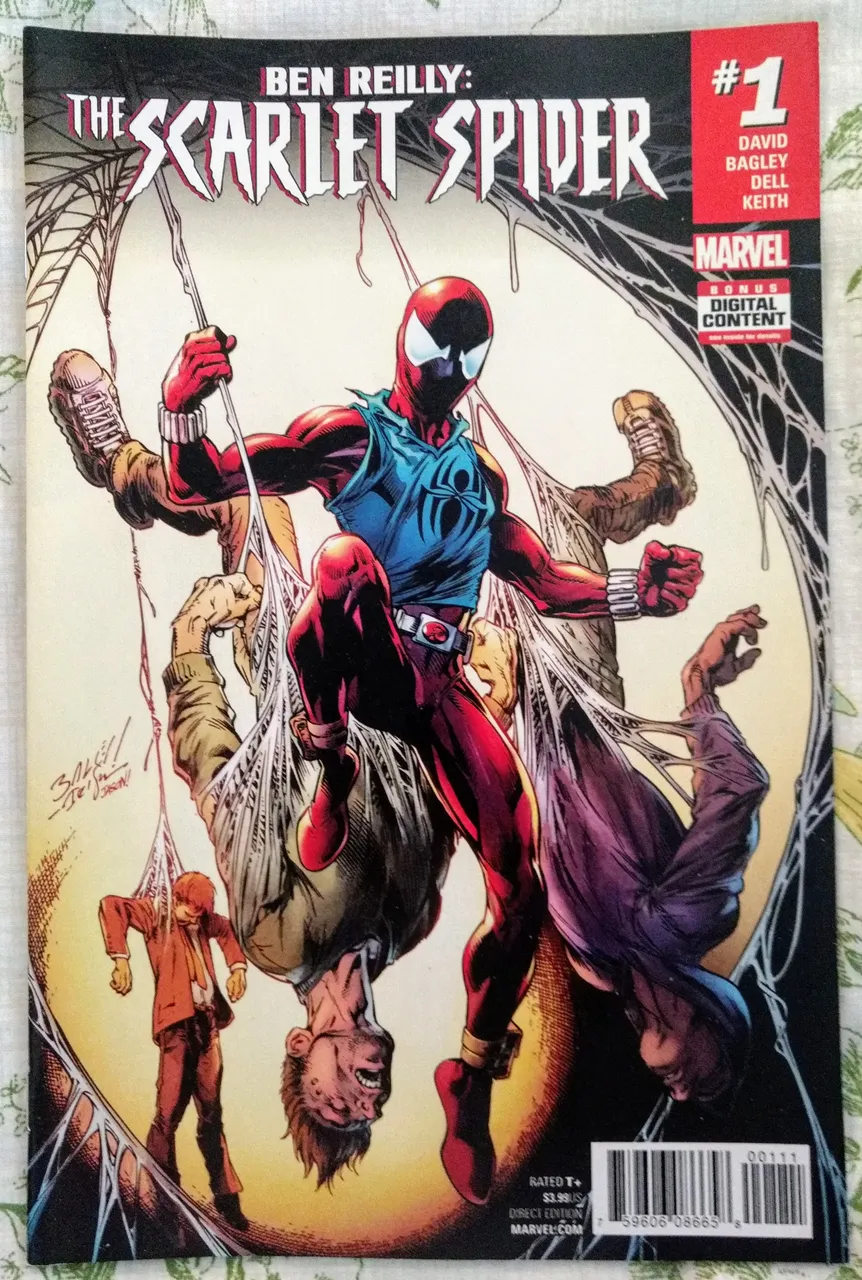
Oh man, when I saw the cover of this one I was excited to read it. I'm not terribly well versed in Peter David's work, but I know he's a well respected writer. And Mark Bagley has never been my favorite artist, but he's definitely more than capable. With these two comic book powerhouse talents at the helm, how could you go wrong? Well, they found a way.
I had literally never heard of The Scarlet Spider, so I went into this with zero foreknowledge, and in theory zero expectations. From the cover he looks like he's in the same territory as Spiderman, and the recap page confirms this.
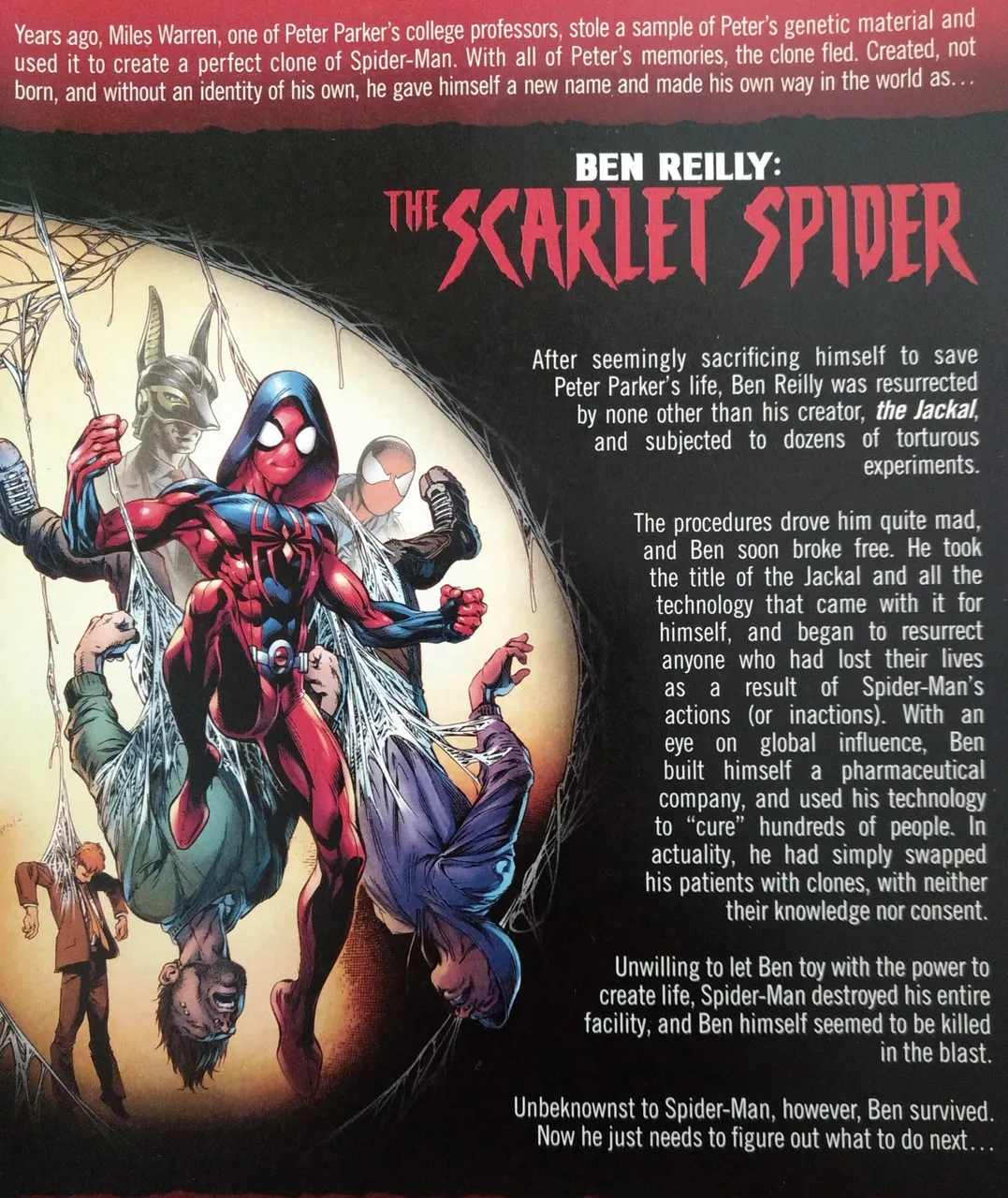
Now I know it's insanely difficult to condense what sounds like years worth of history into a couple paragraphs, but if you can't do it well, then don't bother. I don't know where the story is headed in future issues, but from just reading issue 1, I only really needed to know about a third of what was presented here. He's a clone of Spiderman, he used to be known as the Jackal, and those two factions are warring in his head Tyler Durden style. That would have been enough. But this ham-fisted attempt to catch me up on everything that happened in this dude's life fell flat.
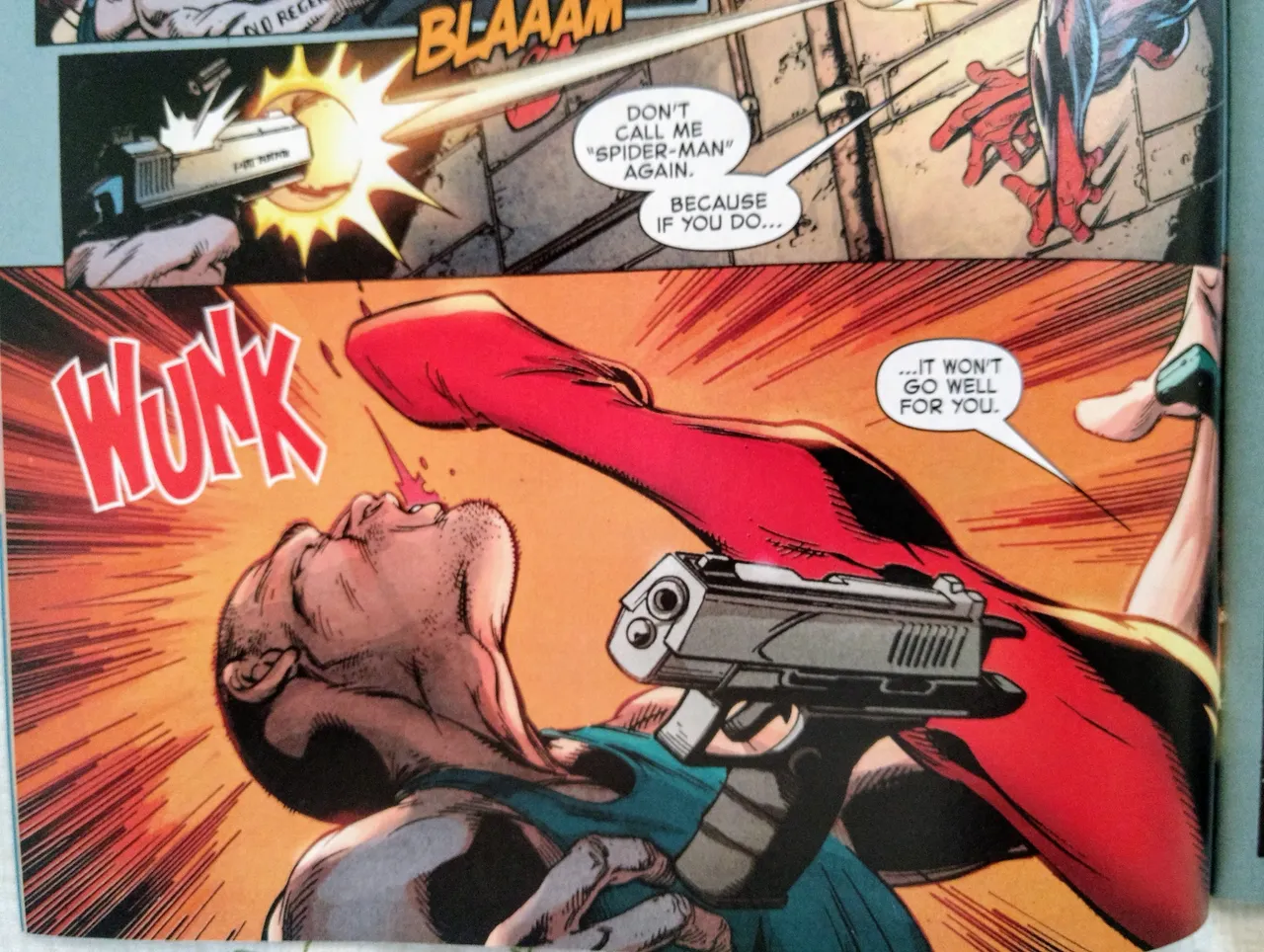
So, not a good start. Then we get into the actual story. From the first couple pages, 2 things are clear: they're setting him up as an anti-hero, and they're desperately trying to find him a catch phrase. He stops a mugger, which features this exchange:
After the action is over, he basically extorts the victim, by saying she owes him a hundred bucks for saving her. She only has 50, and promises to pay him the rest later, which unfortunately leads to these words being committed to the printed page:
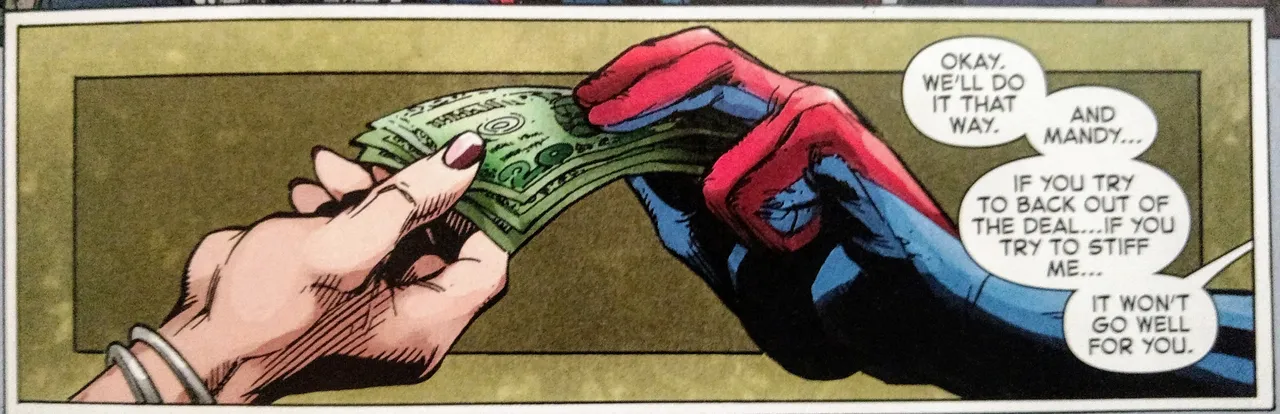
See what they did there? I can only imagine the rest of the series features Ben Reilly explaining that things won't go well for people, whether he's saving them or assaulting them. It's bad enough to have yet another anti-hero in the comics world (I was tired of it in the 90's when Lobo was everywhere), but the greater crime is that it's executed so poorly. If you're going to try to pull off the likable sociopath trope, the protagonist has to actually be likable. I found nothing in here that made me even remotely care what happens to this character or in this story. I will not be pursuing this one further.
The one thing here that's not terrible is the art. It is definitely not Bagley's finest work, but Bagley on a bad day is still better than many. However, in this case, that's just not enough to make up for the terrible, terrible writing.