
Finding a treasure of tranquility on the doorstep of the city centre of Durban sounds almost too good to be true.
Hubby for one was skeptical, but I've been to this special green lung in our city before, and was determined to drag him there as I wanted to go on the guided interactive golf cart tour and pretend I'm a tourist in my own city for the day.
Gentle persuasion as only a woman can do, did the trick :)
Hubby was enraptured from the moment we stepped into the park.
I wrote a blog about the park a while back, but this was a totally different experience.
Our guide Vishnu has become legendary for his vast knowledge of the giants in the Botanic Gardens, and I saw way, way more than on a previous visit when a friend and I simply strolled through the park, an experience I shared here on Hive. Vishnu however showed us sights that I totally missed during my walk through the park.
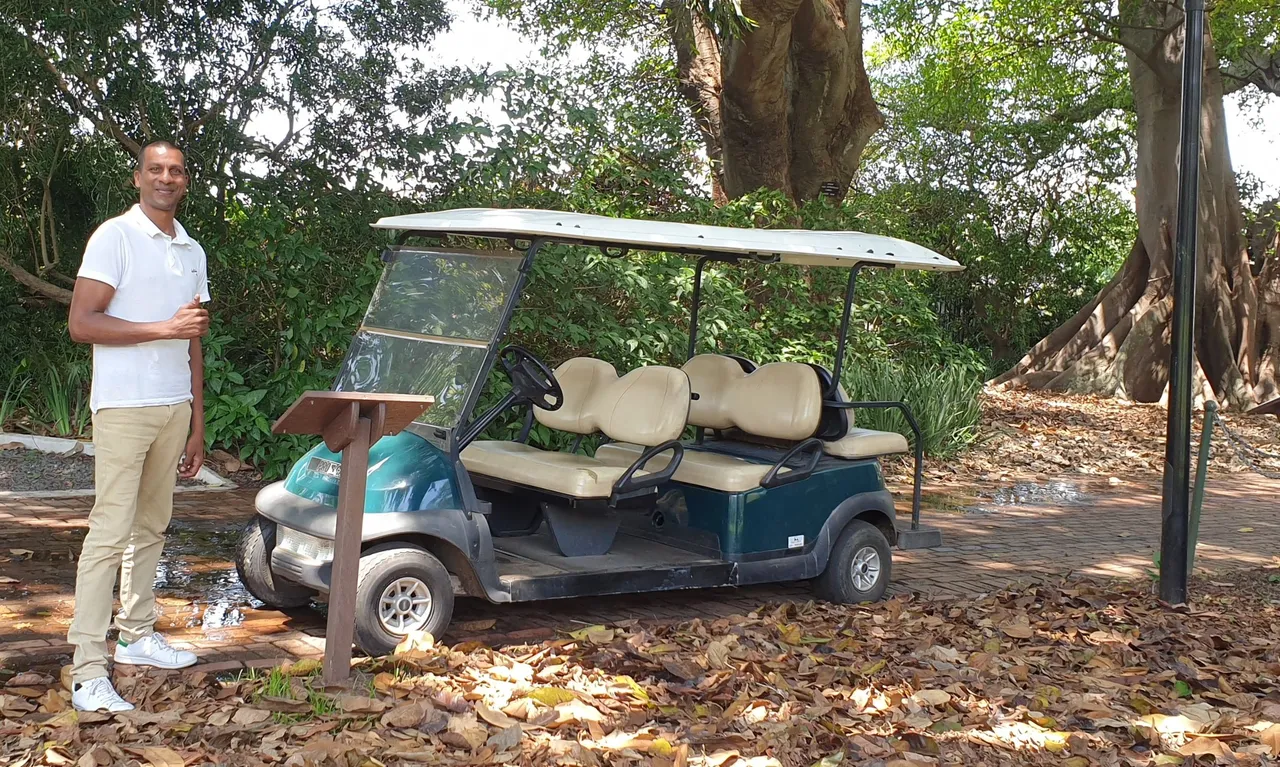
He told us that tourists from all over the world visited the park before Covid, and are now coming back in full force. The park was not so full as it was a weekday, but is set abuzz over weekends, and is a popular venue for wedding party photo shoots. He had us in stitches with his description of how some of the ladies with their stilettos get planted into the lush lawns and have to do all kinds of balancing acts in the process!
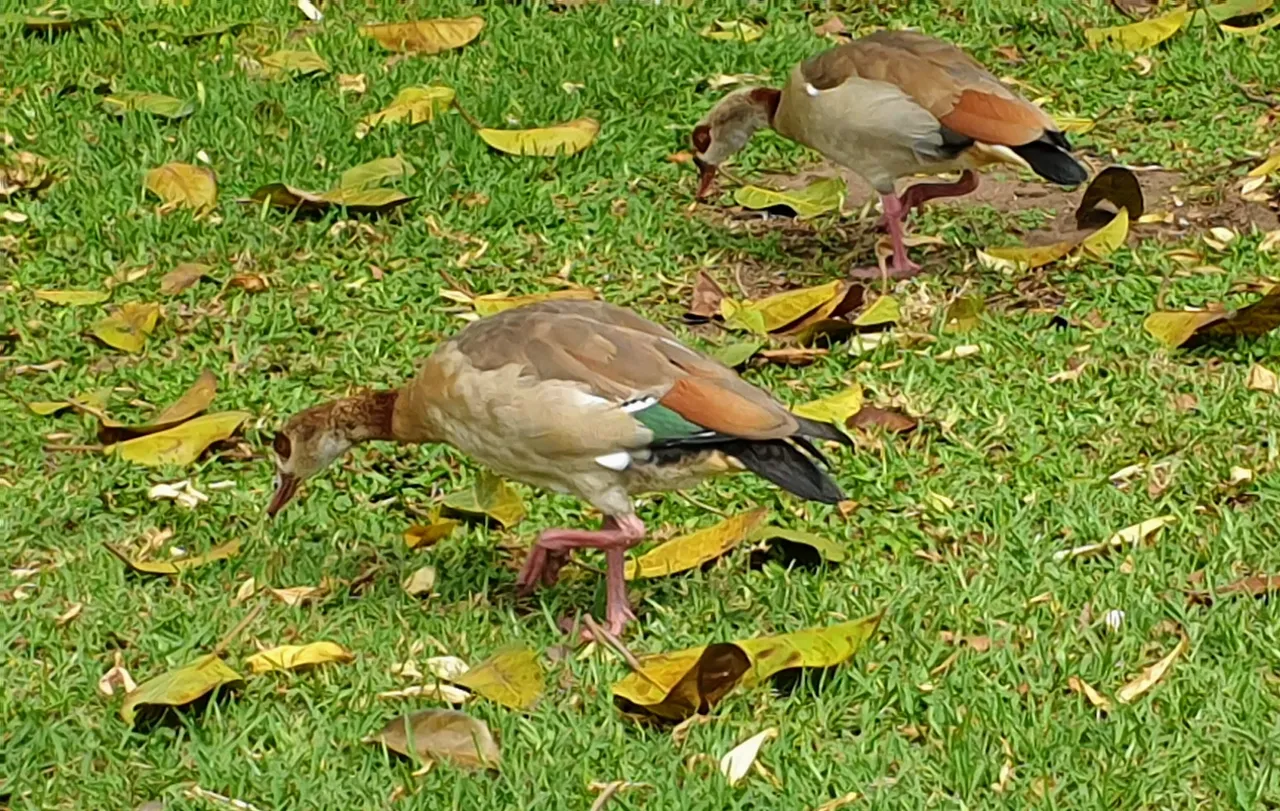
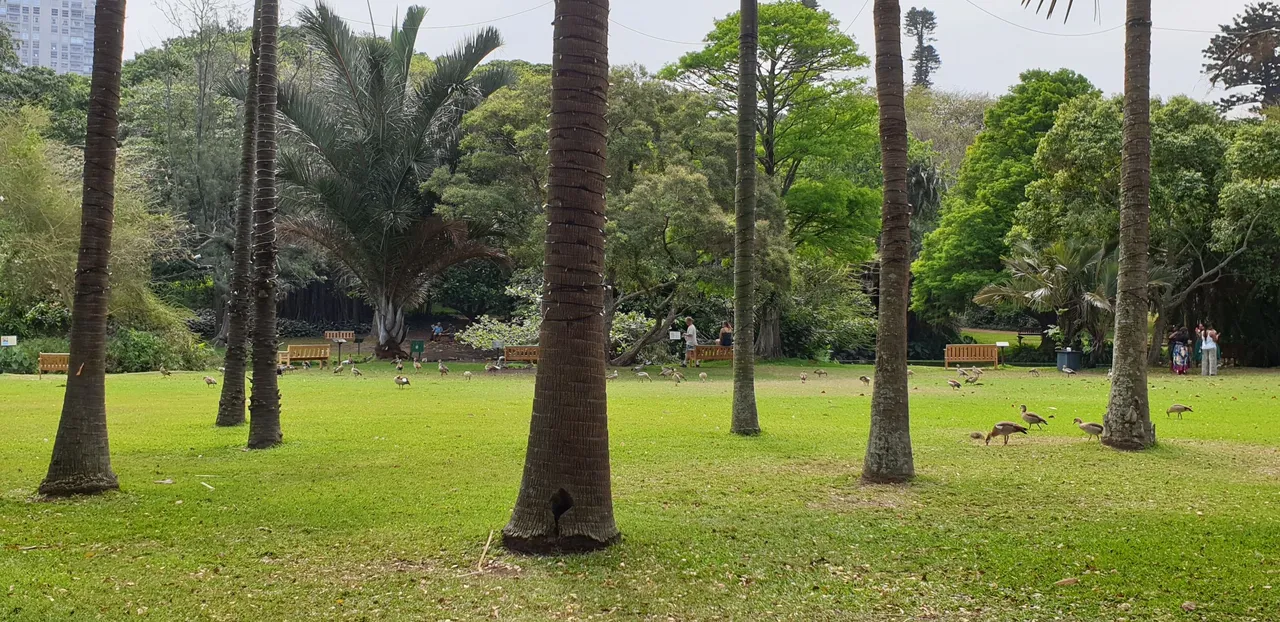
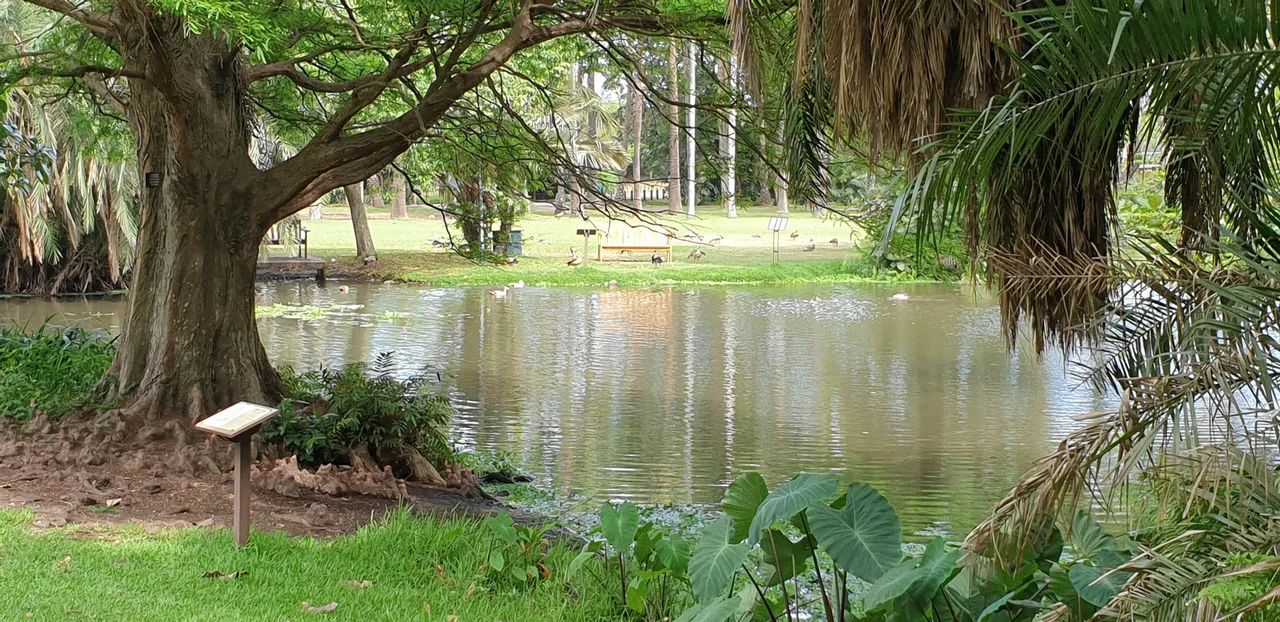
Egyptian Geese thrive here, and with their webbed feet do not have any problem walking on the lawn!
Giants of the park
The park is primarily an arboretum, with a vast collection of exotic trees that interestingly originally were brought into the country in the late 19th century for agricultural research. Some of the trees have withstood the sands of time, and are over 100 years old!
The focus has changed to the planting of indigenous trees in the past couple of years.
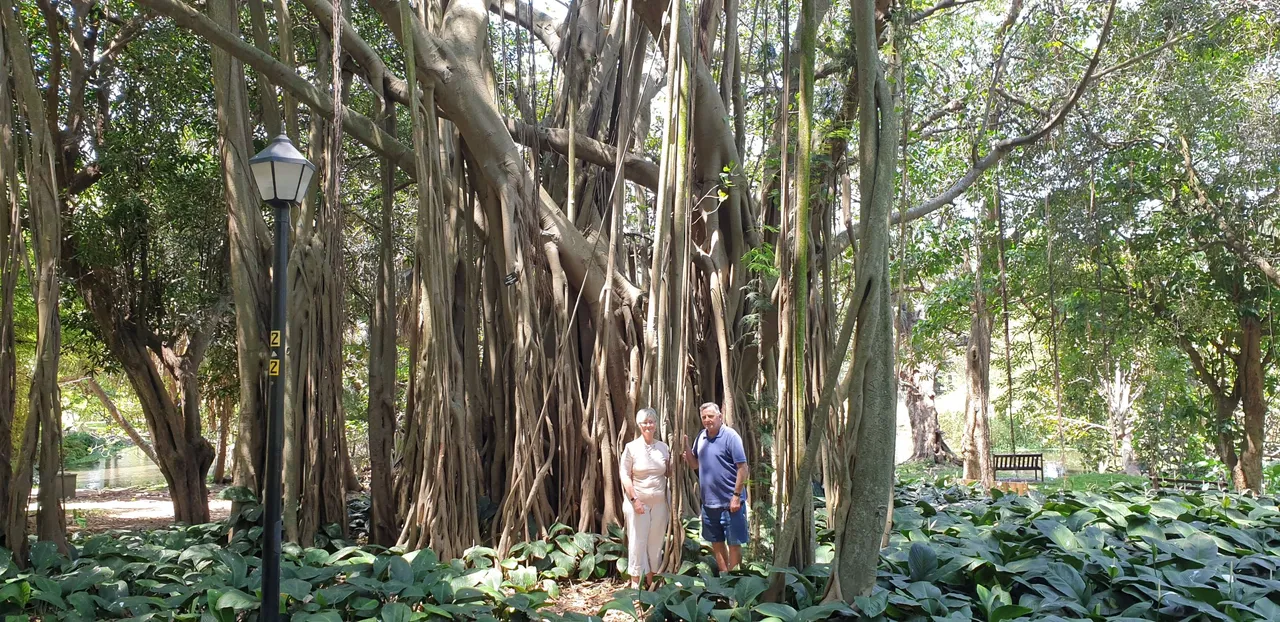
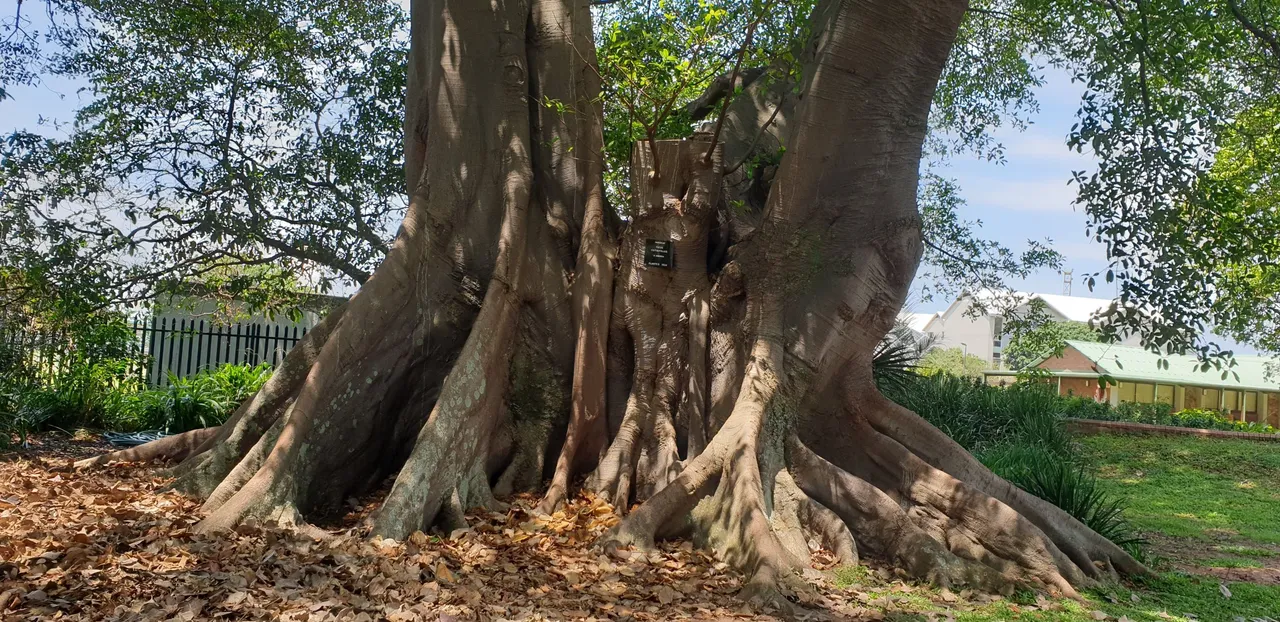
This is the giant Indian Banyan tree - Wishfulfilling, Long Life and Abundance, and is seen as a symbol of long life - a sacred tree in India. These are the largest trees in the world by canopy size; one individual specimen in Andhra Pradesh is said to cover 19,107 square metres!
Same with this giant - I'm a tiny speck at the base of the trunk.
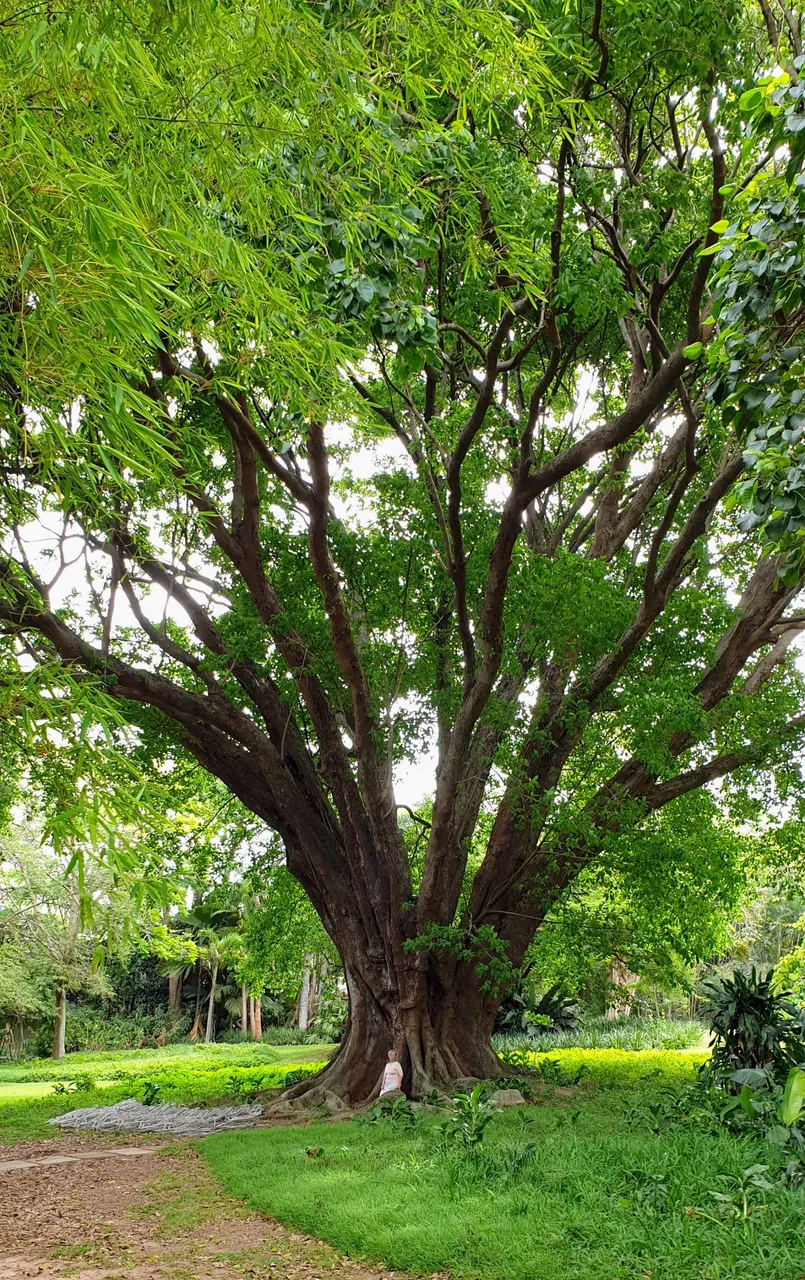
A massive Ficus planted in 1934
We learned much about the amazing plants and trees, and I'm sorry that I did not record the tour guide sharing his wealth of knowledge, but then I'd end up with a mighty long blog, so I will share with you what stood out from the photos we took.
I must credit Vishnu for taking some of the photos with my cell phone of course!
Giant Palms are next to the lake where there are tons of waterbirds, although the Egyptian geese rule the roost here.
There were many standout trees, each with its own charm, and if I had to choose a favourite, it would be the Rainbow Eucalyptus, which I'll tell you about a little later!
Exotic Fruit
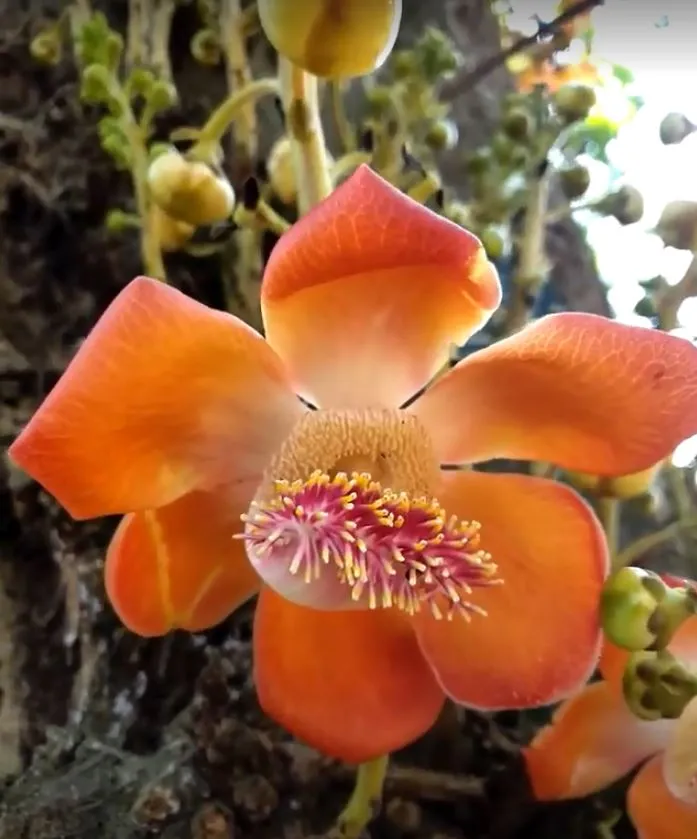
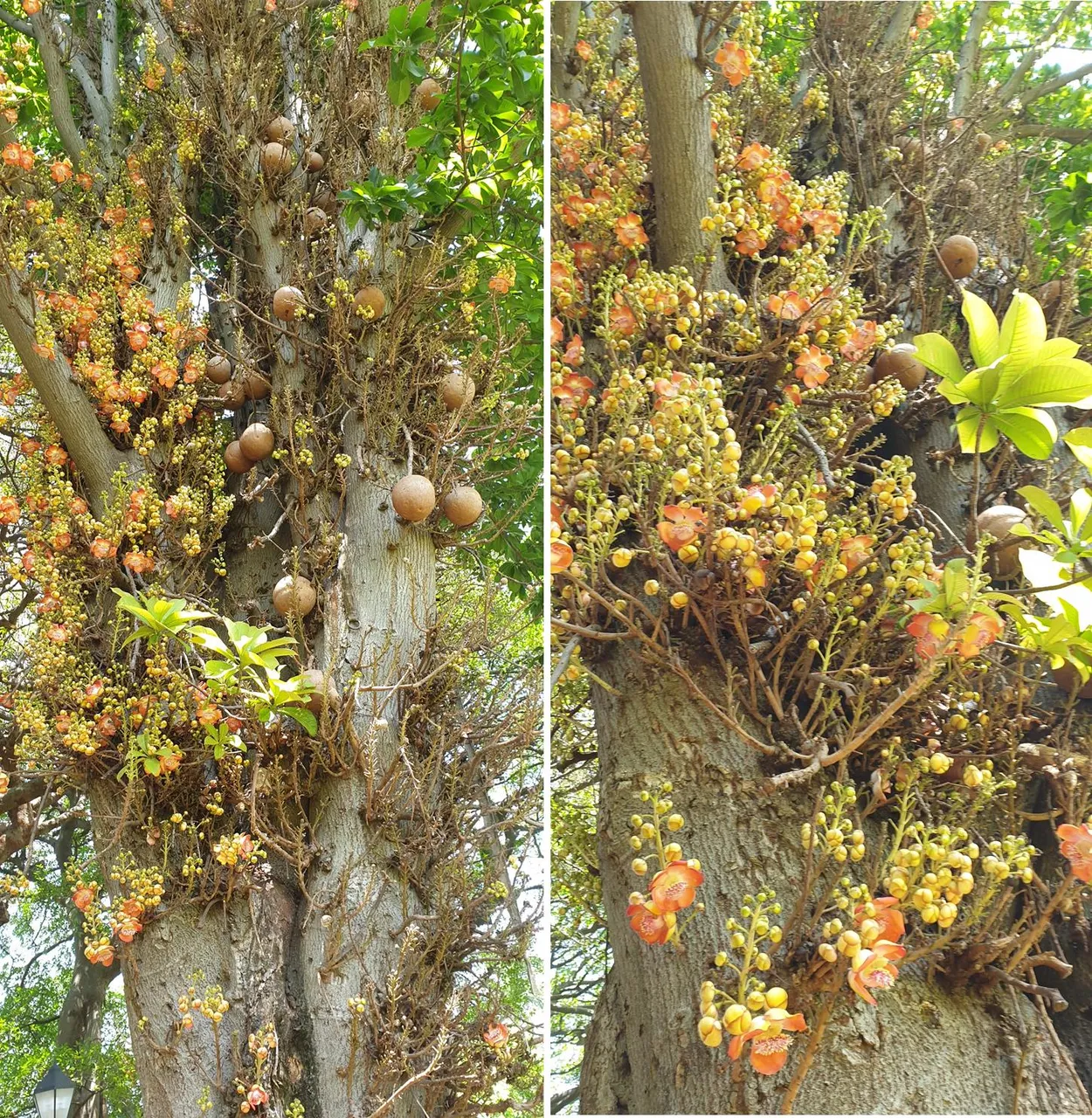
Vishnu warned us to be careful of standing underneath the Cannonball Tree, and tongue-in-cheek said if we have a bone to pick with someone, we should lure the person there for a conversation, but stay well out of range of the cannons. They are much bigger than they look in the photo! The tree has pretty flowers that turn into giant cannonballs, hence the name.
Those cannonballs are edible, but have an unpleasant smell and is mostly used for medicinal purposes.
The very first Lychee tree brought into SA is still thriving here, a gigantic specimen, so naturally the fruit is way too high, but it makes a delicious seasonal feast for the vervet monkeys who forage in the park.
There is an enormous Cinnamon Tree here as well, and our guide pulled off a little piece of bark for me to smell.
In this photo you can see the Cinnamon bark, and next to it is the seed pod of the Kapok tree, which grows naturally in the rain forests. Kapok has a fluffy silk-like texture and makes the perfect natural filling for cushions and pillows.
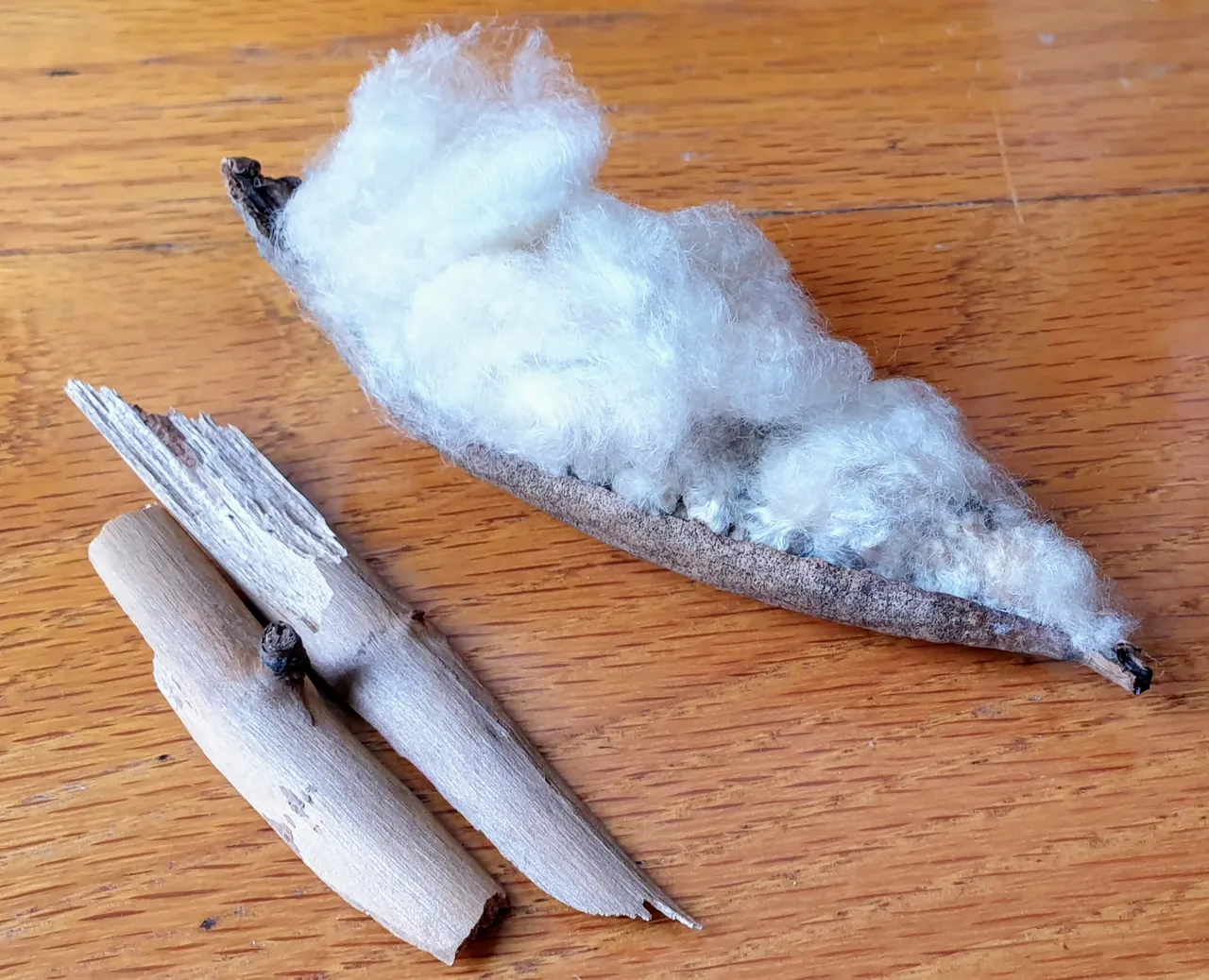
Next time I visit the park, I will make sure to see what's happening up in the trees, as that's where all the treasures are found.
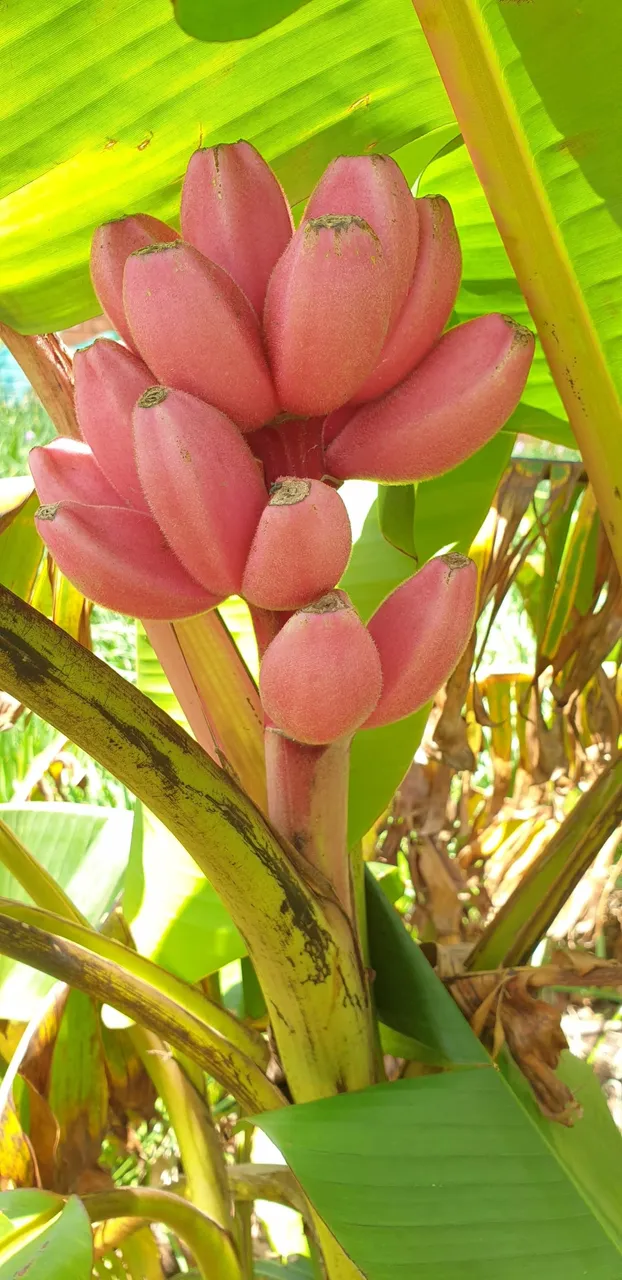
This cluster of pink Bananas is edible, but apparently, it has so many seeds, that it really is not worth it! This wild Banana originates from the Himalayas.
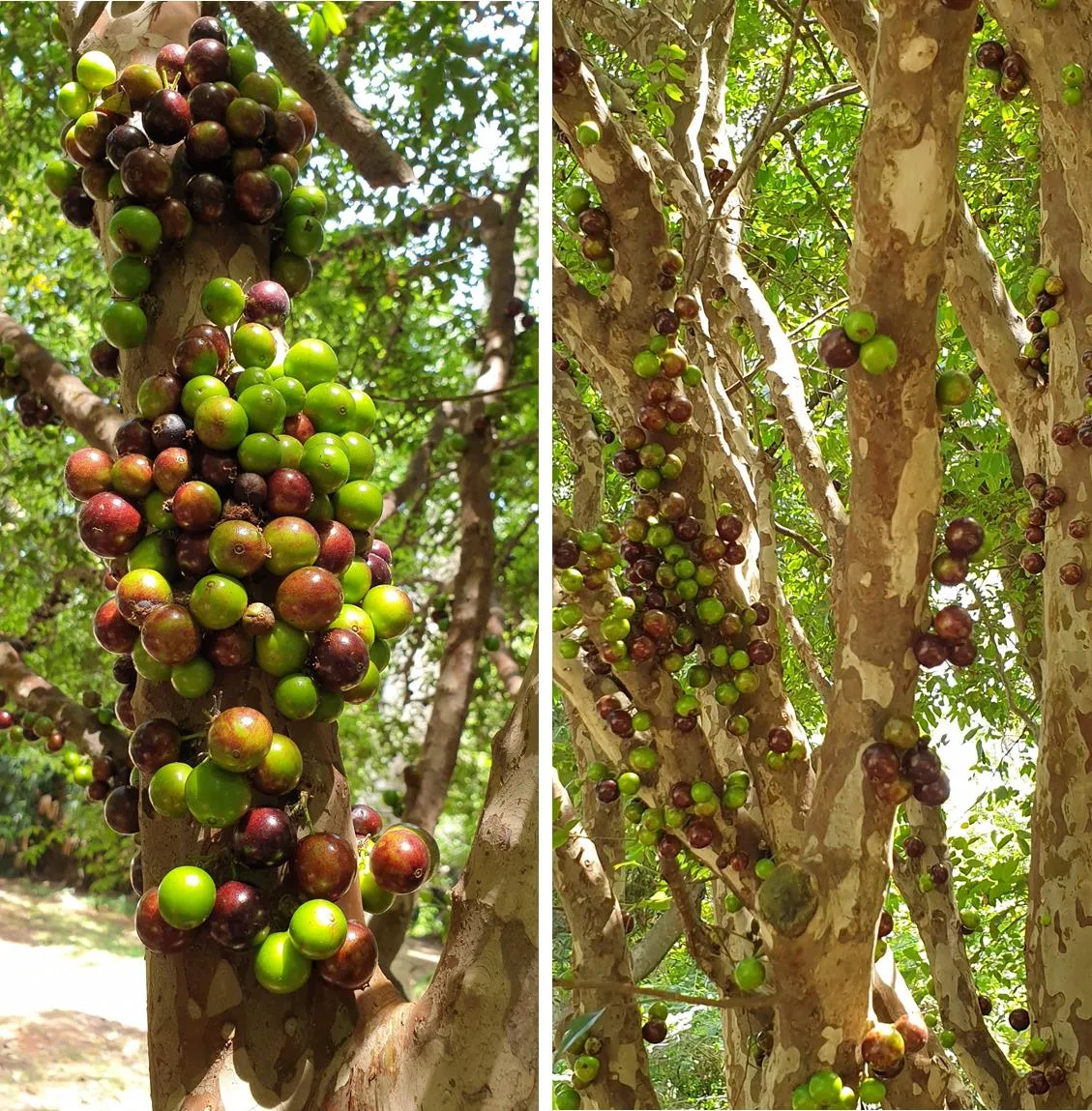
Another fascinating fruit-bearing tree that I've never seen before, is the Brazilian Grape-tree. The fruit grows directly on the tree trunk and is only ripe when it's a purplish-black. It tastes a tad like grapes, but is more tart, and has three pulp-like piths. It is used to make preserves in its native countries; we're not familiar with it, but the clusters of fruit with varying shades, really look pretty!
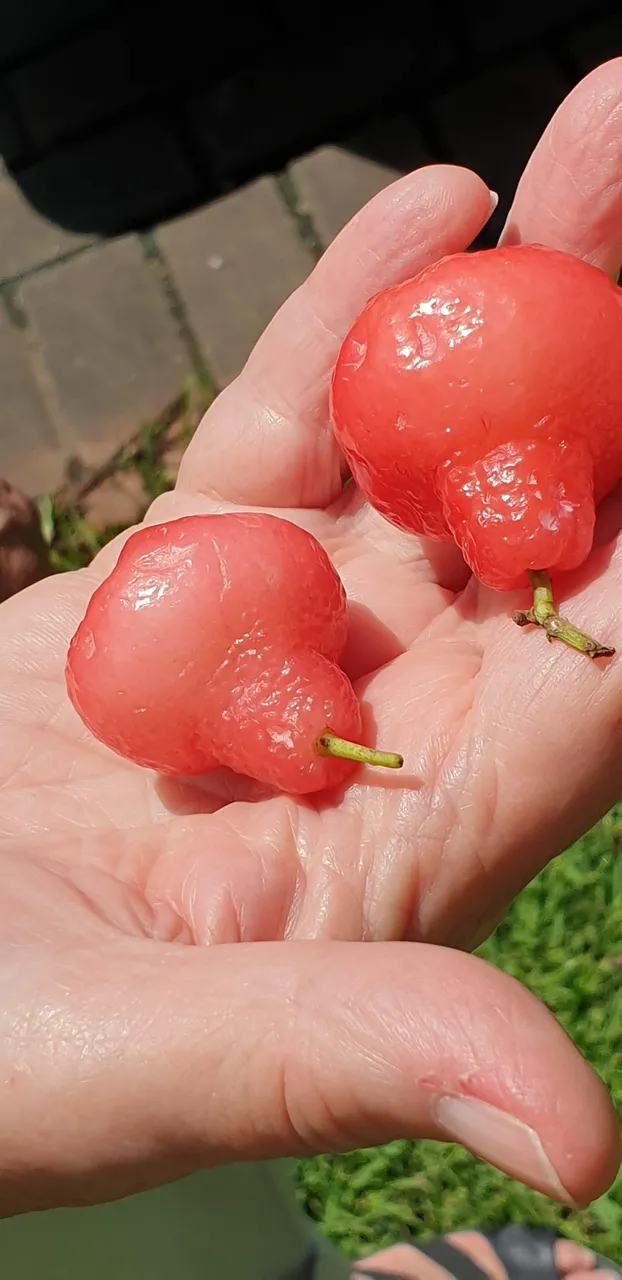
The edible Java or Wax Apple is native to Malaysia and bears waxy fruit that kind of resembles apples, they turn bright red when they are ripe. This fruit can be stewed much like regular apples or is used to make a sauce.
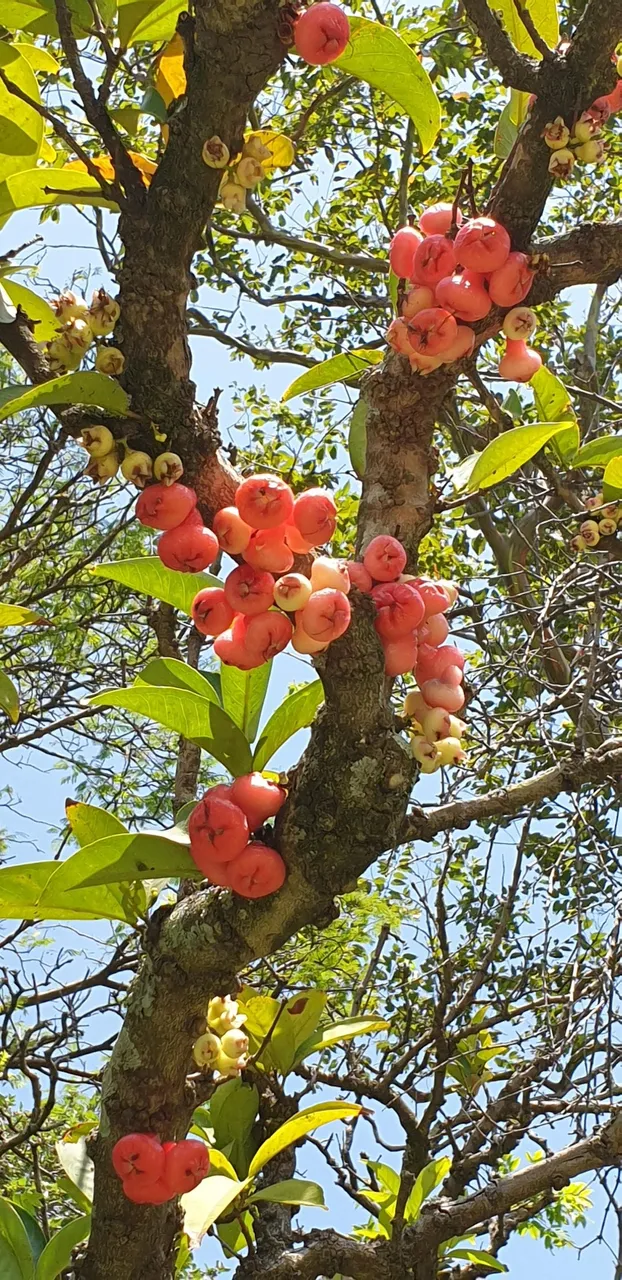
They're not as small as it looks on the tree, which can grow up to 12 metres high.
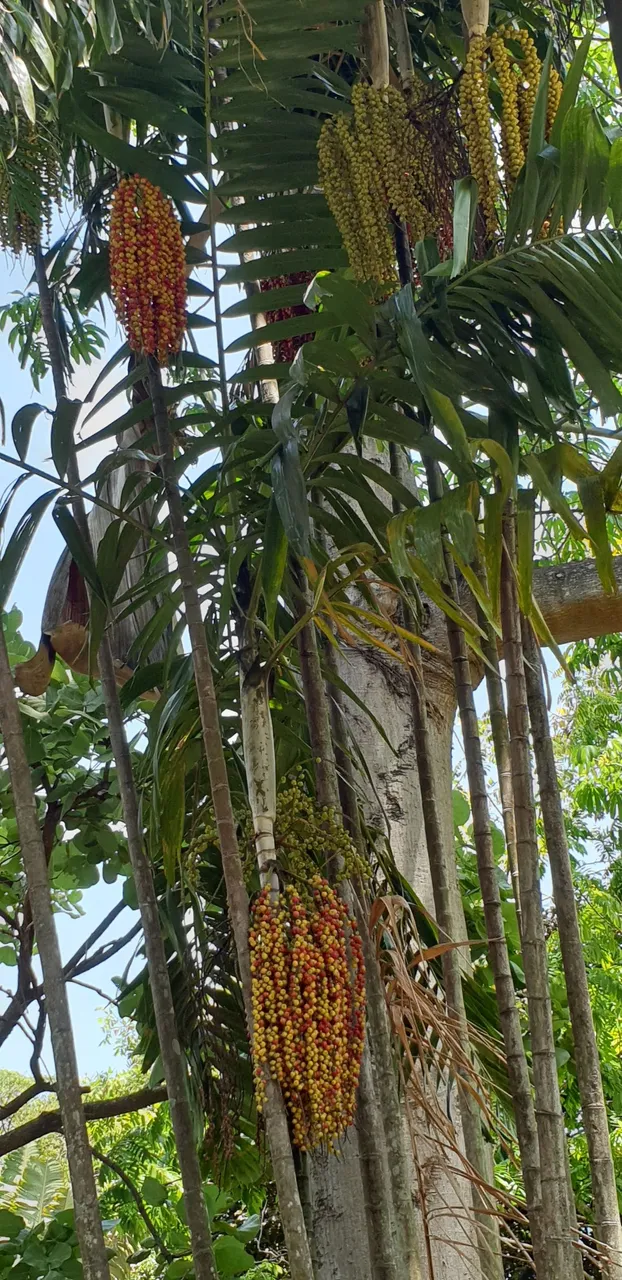
I cannot remember what this palm is called, but when doing an image search, it appears to be the Areca Palm, and the fruit is used for medicinal purposes - I should have recorded Vishnu!
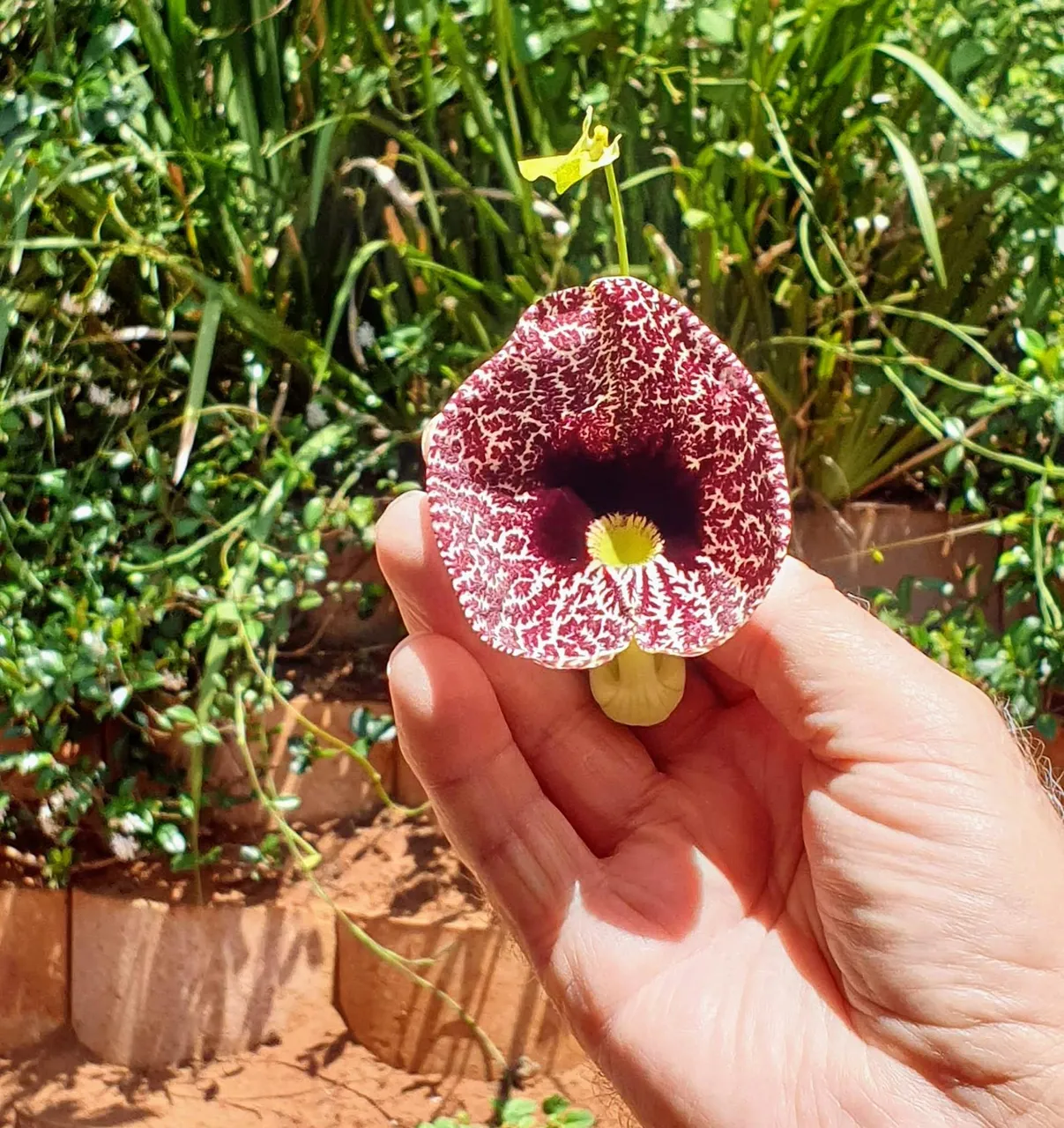
Very pretty invasive weed
Would you believe me if I told you that this very pretty Calico flower, or Dutchman's Pipe, actually is an invasive creeping weed that will kill off other plants? Some people still cultivate them in certain countries, but here they have a constant battle to get rid of them, as they grow prolifically and start taking over.
Abstract art by nature?
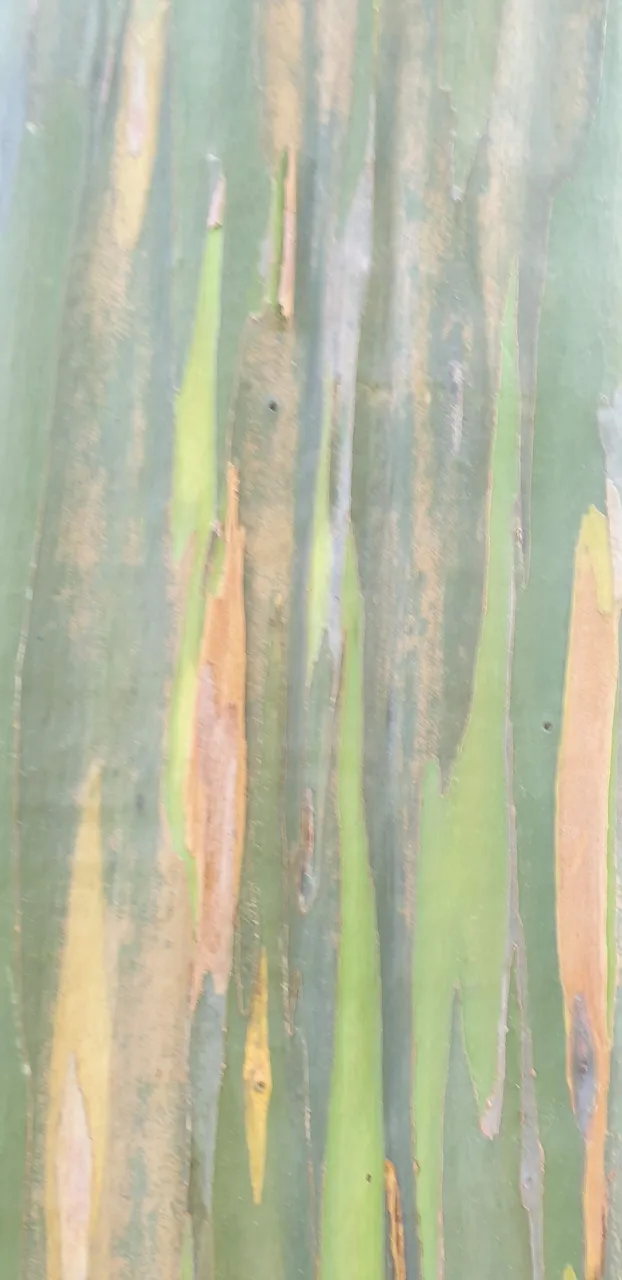
The enormous Rainbow Eucalyptus Tree has the most stunning bark, that continuously peels to reveal the most stunning abstract art. This tree apparently is a very thirsty specimen, perfect for wet areas, as it drinks up to 100 litres of water per day.
It was a hot day when we went, so Vishnu told us to touch the bark of the tree; it was surprisingly very cool to the touch!
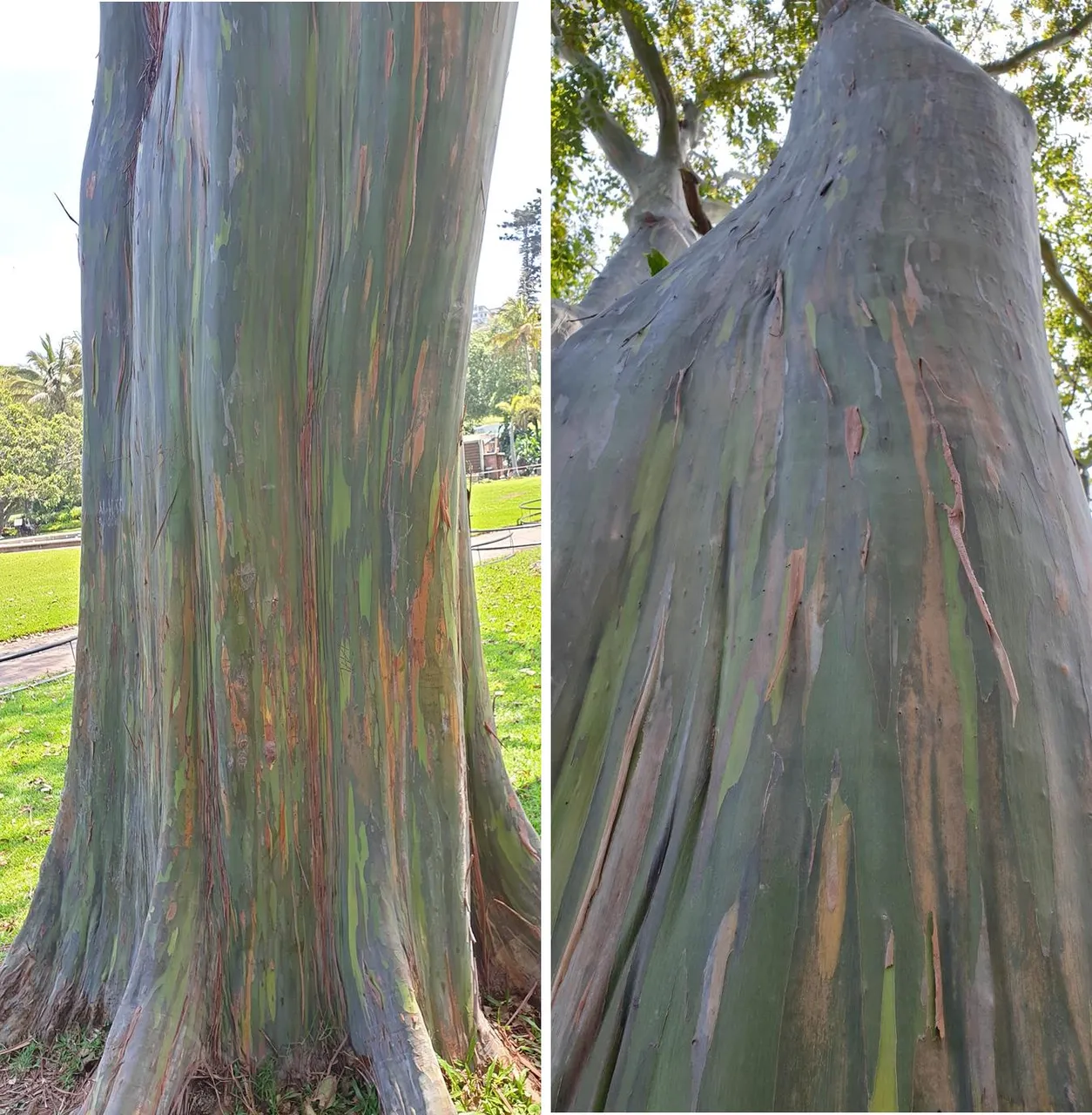
This one was a smaller specimen, believe it or not!
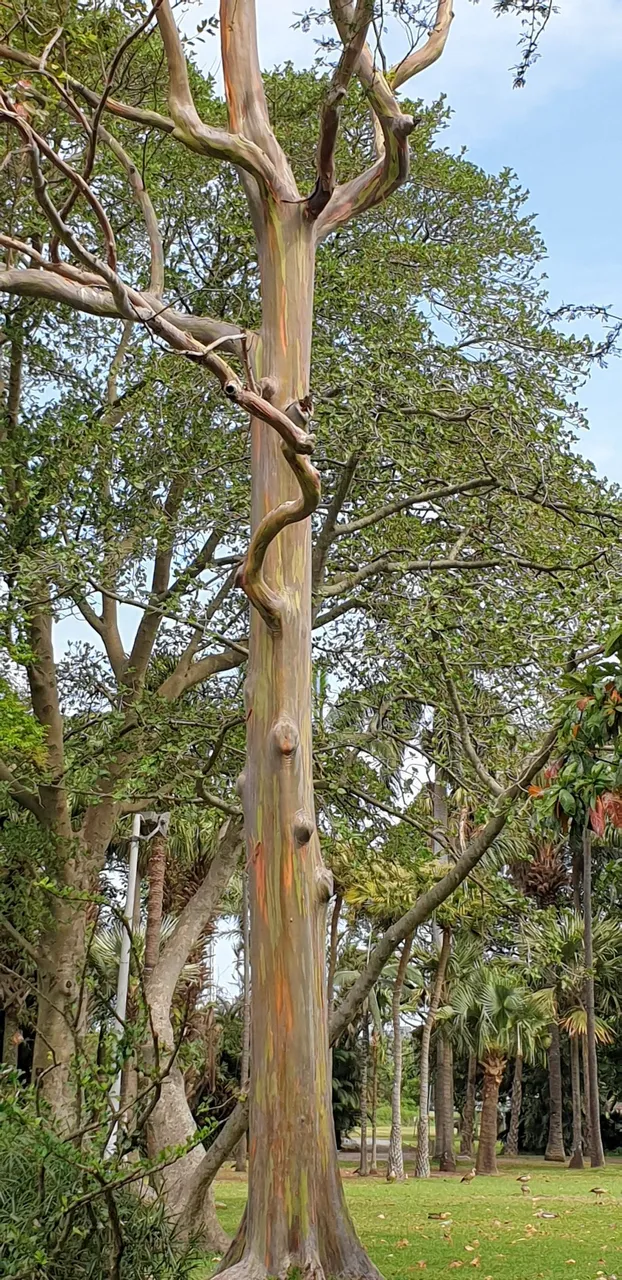
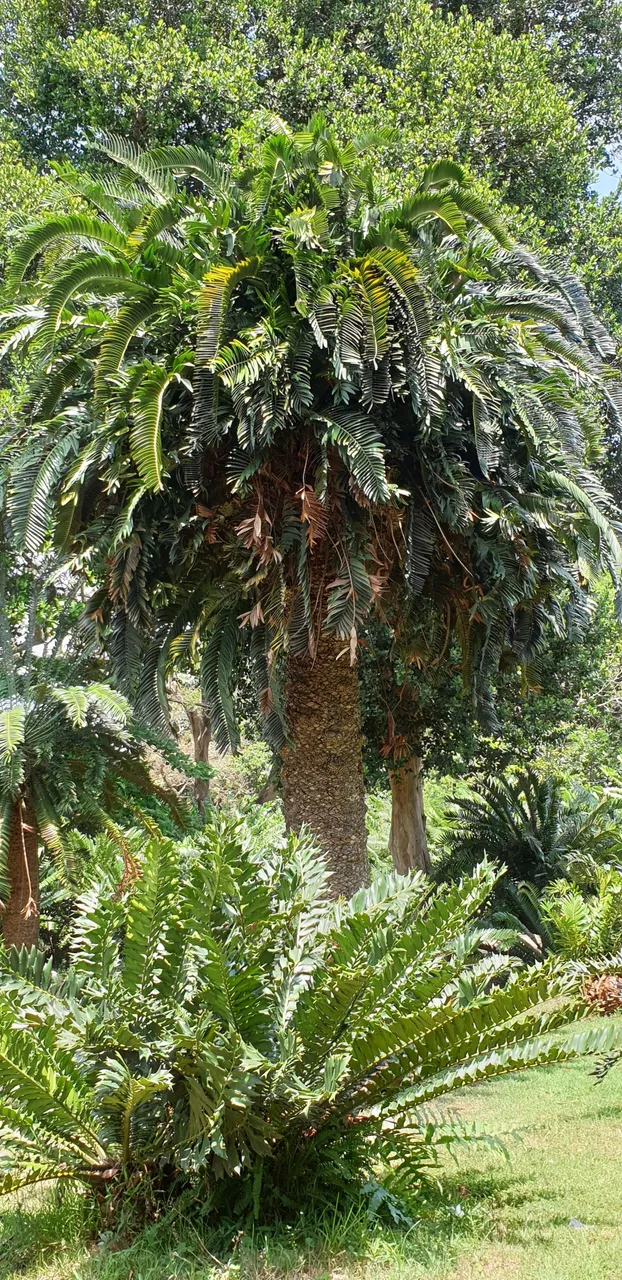
The Loneliest Man in the Park
This Cycad is known as Wood's Cycad - Encephalartos woodii and is one of the rarest plants in the world. There are no female plants so they have become extinct in the wild; the only specimens found are clones. Unbelievably, some of the off-shoots of this Cycad were chopped off by thieves, as it is sold on the illicit market as an aphrodisiac. The park has security cameras in place facing this lonely old man, but it was no deterrent to the thieves as this fetches high prices in countries like southern India and Malaysia.
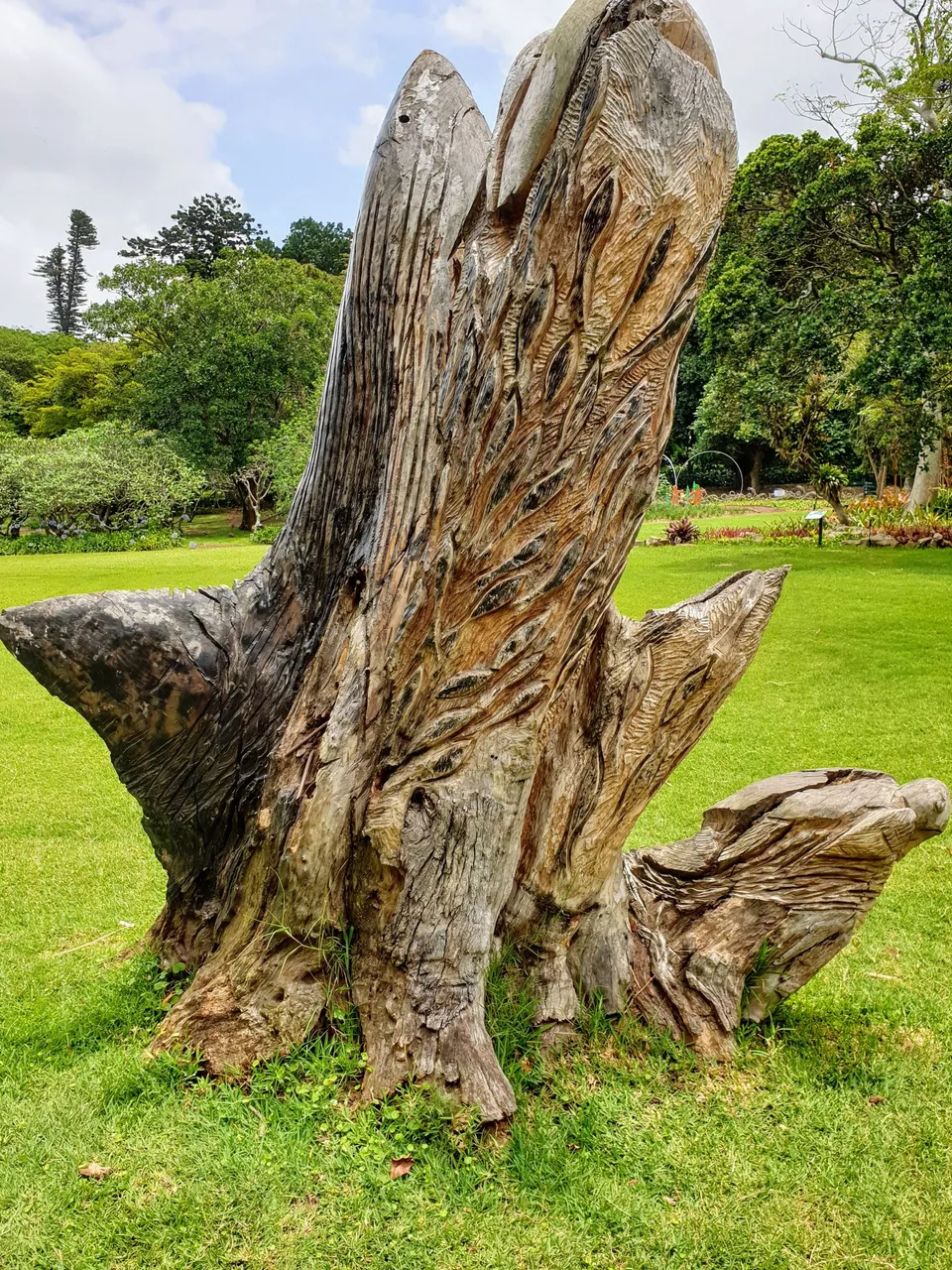
Man-made Art
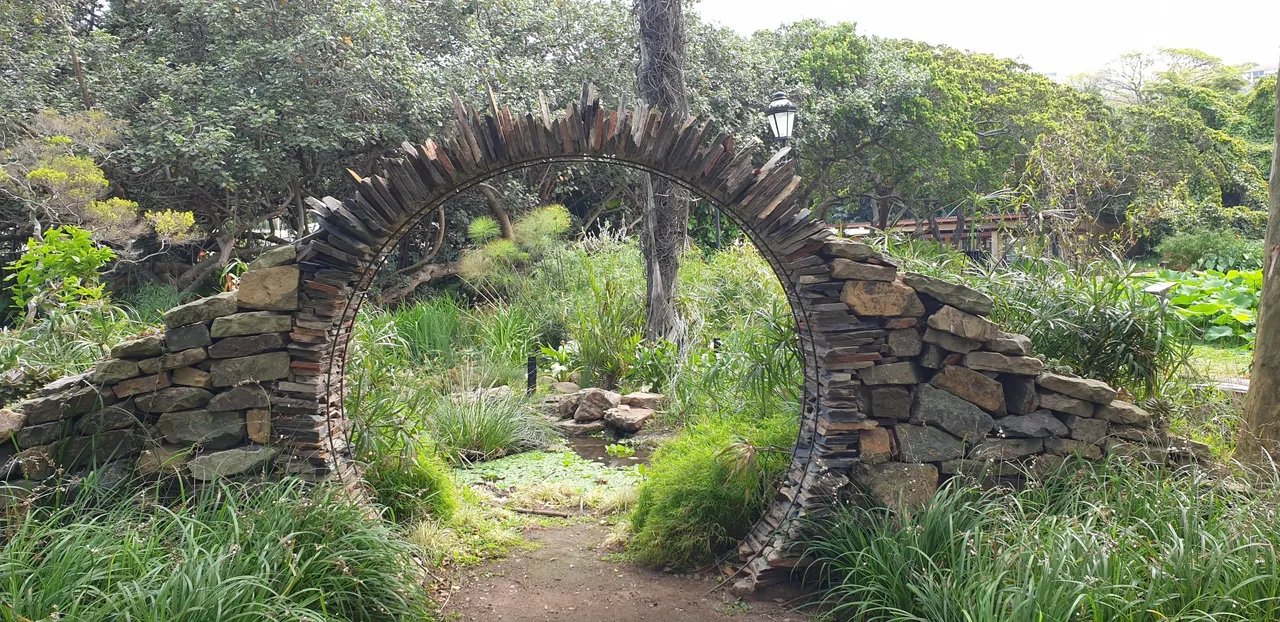
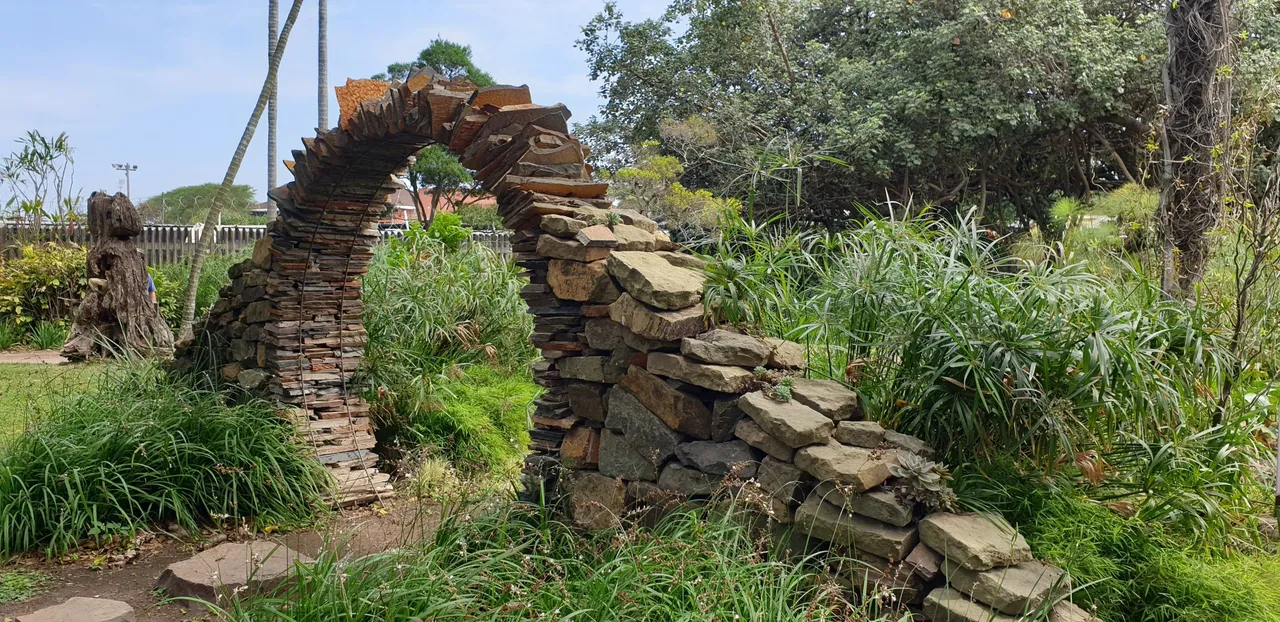
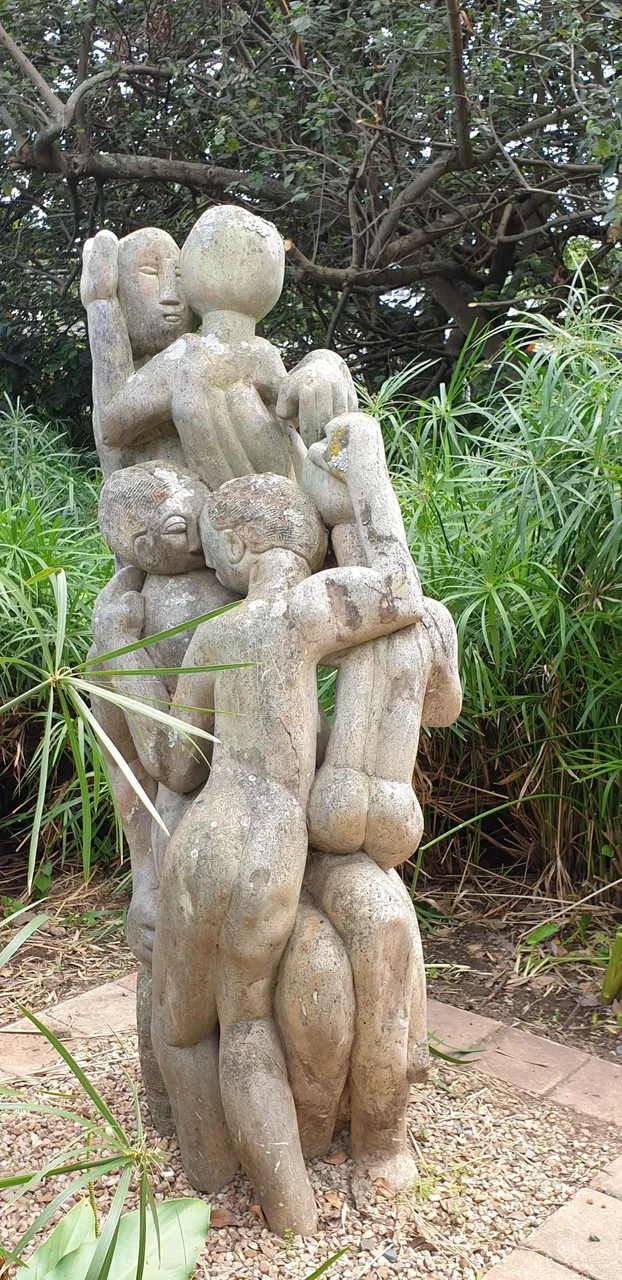
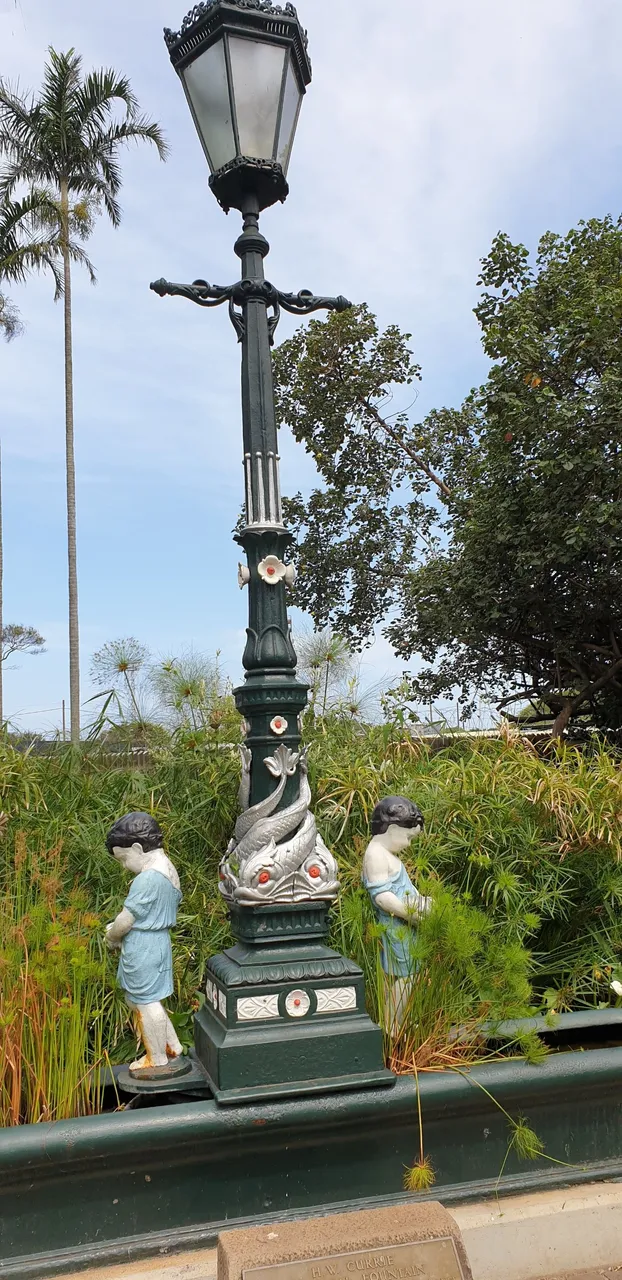
There are many sculptures, some out of sandstone, some carved in the base of old trees that died and had to be cut down, and artwork using slate.
Garden for the Blind
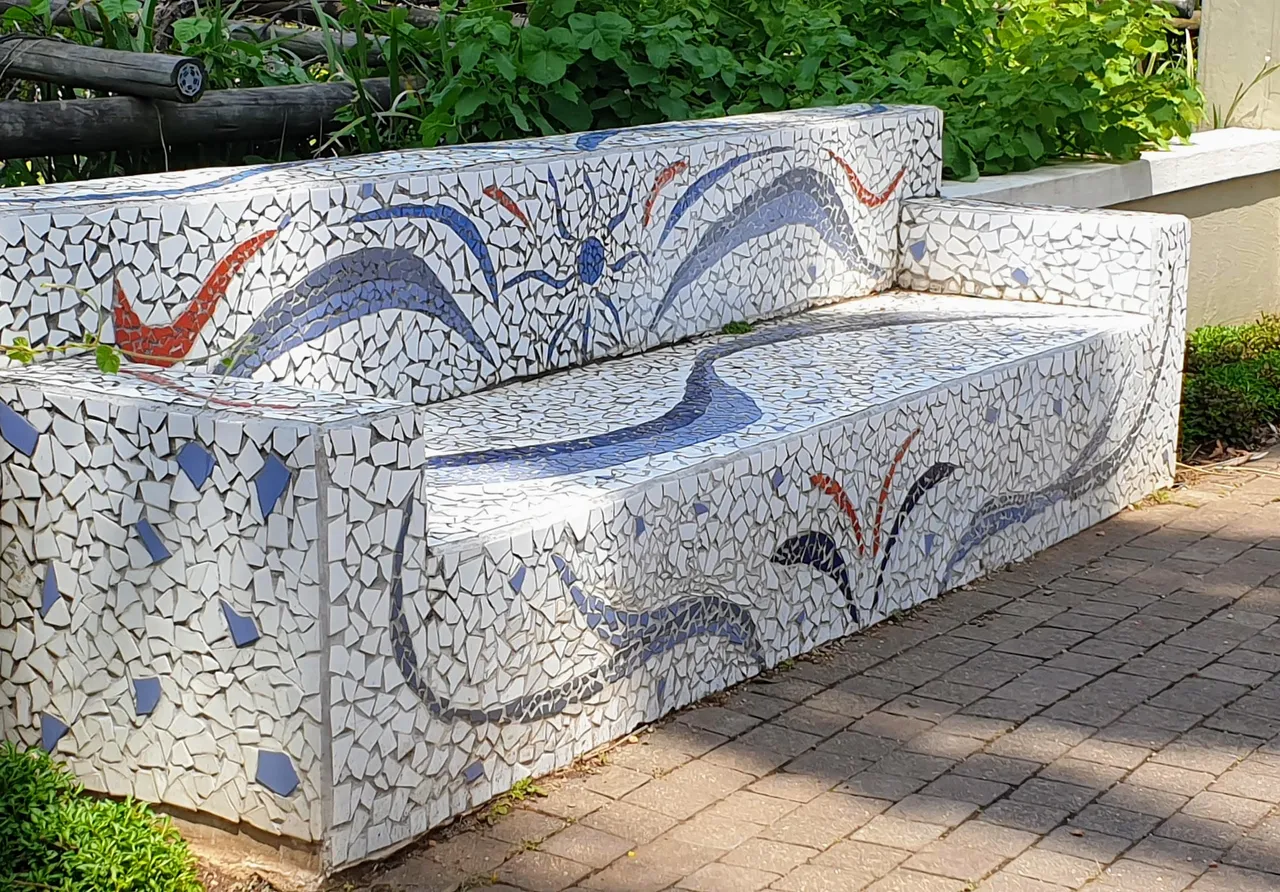
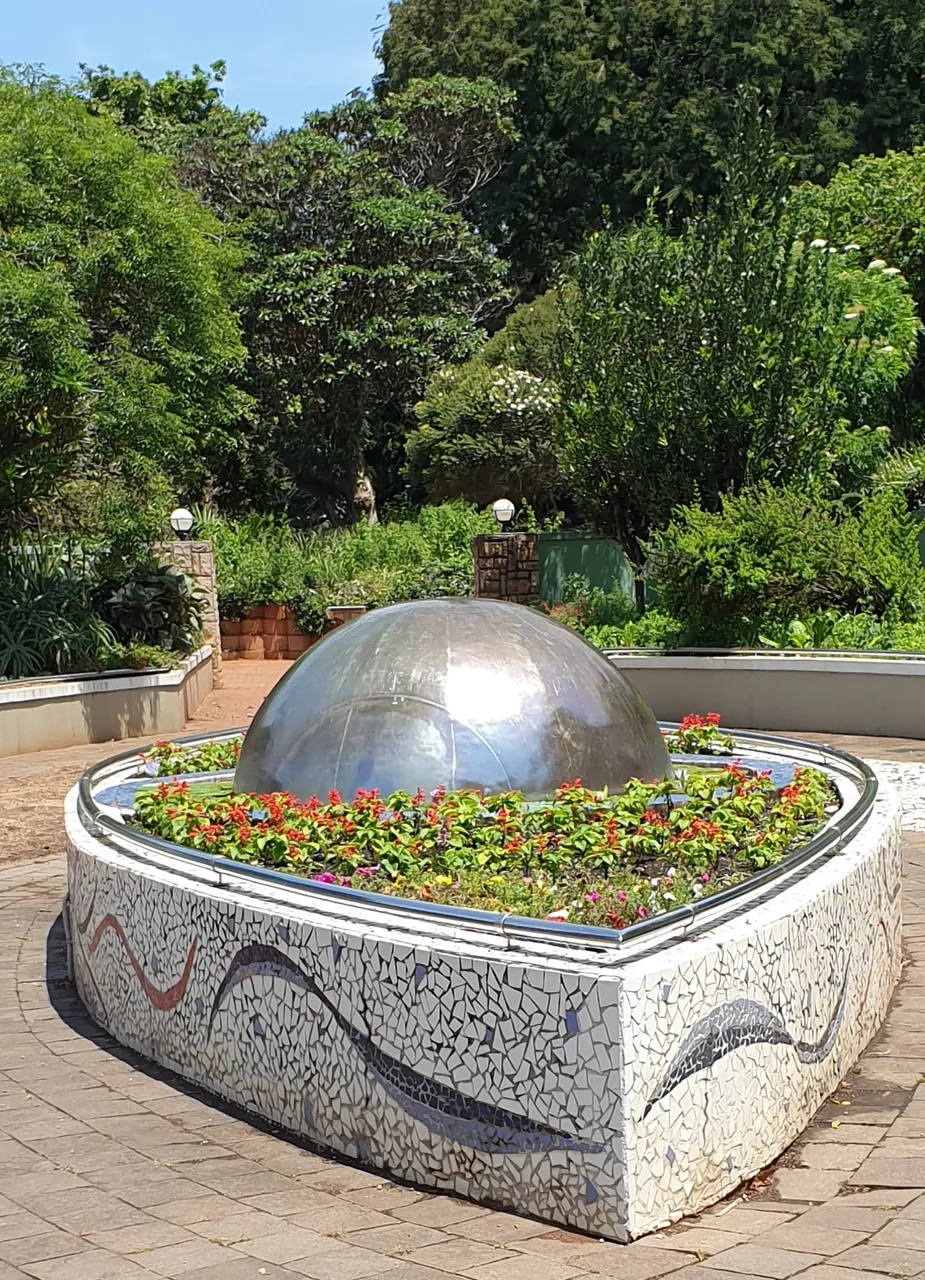
This mosaic art is found in the section for the blind where they've planted fragrant herbs and flowering plants. There are plants to feel and touch as well; one plant with broad leaves feels like real velvet, and the water fountain produces a very fine mist of water.
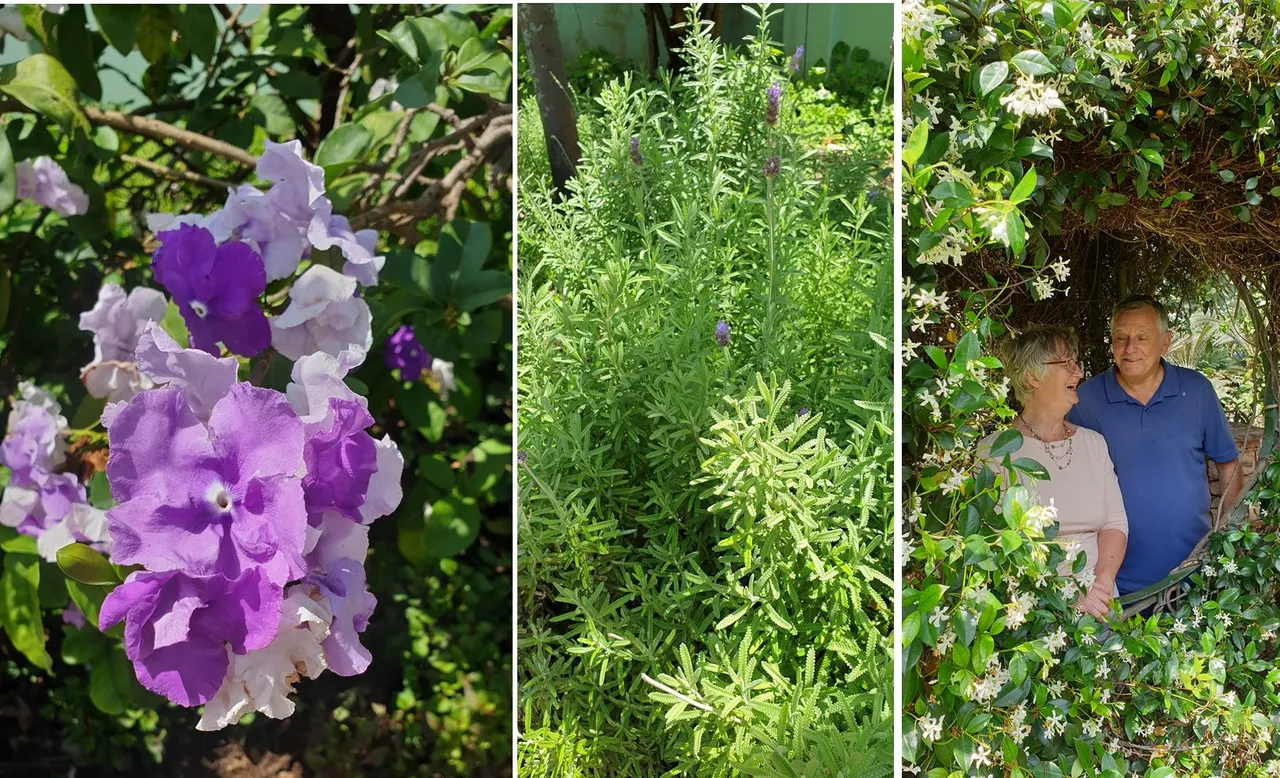
Three very fragrant plants that I also have in my garden, except they don't grow as well as these plants, are the Yesterday, today and tomorrow, Lavender and of course Jasmine.
Sunken Garden
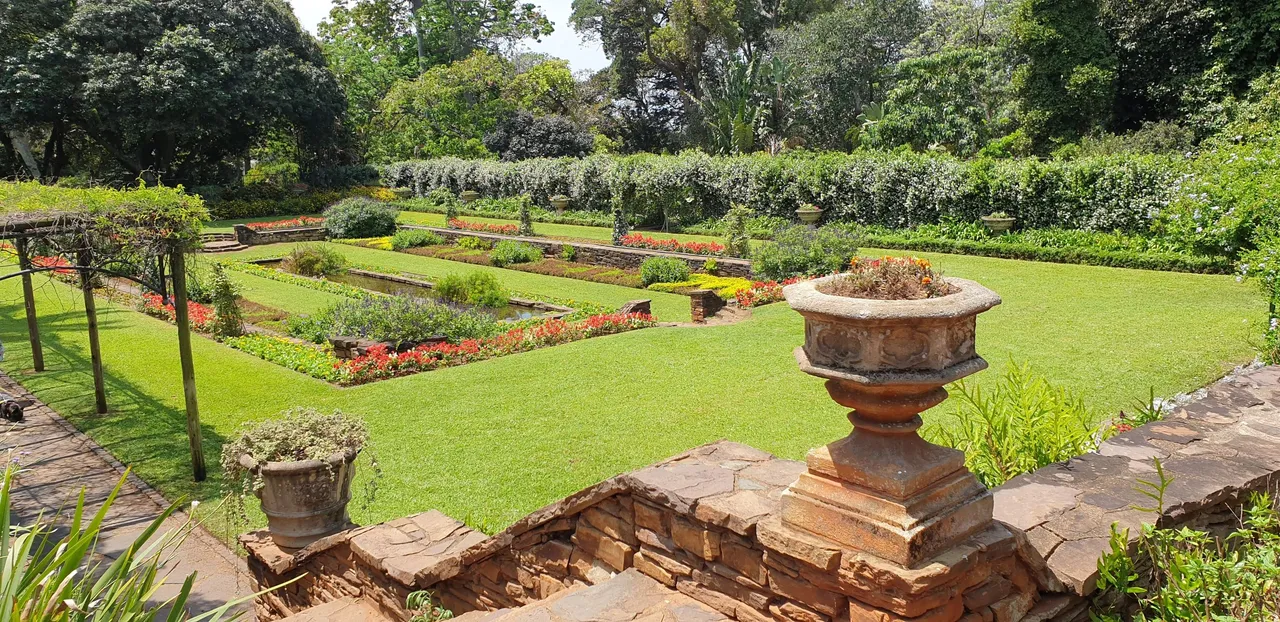
A very pretty but more formal garden layout.
Tranquility and waterbirds at the lake
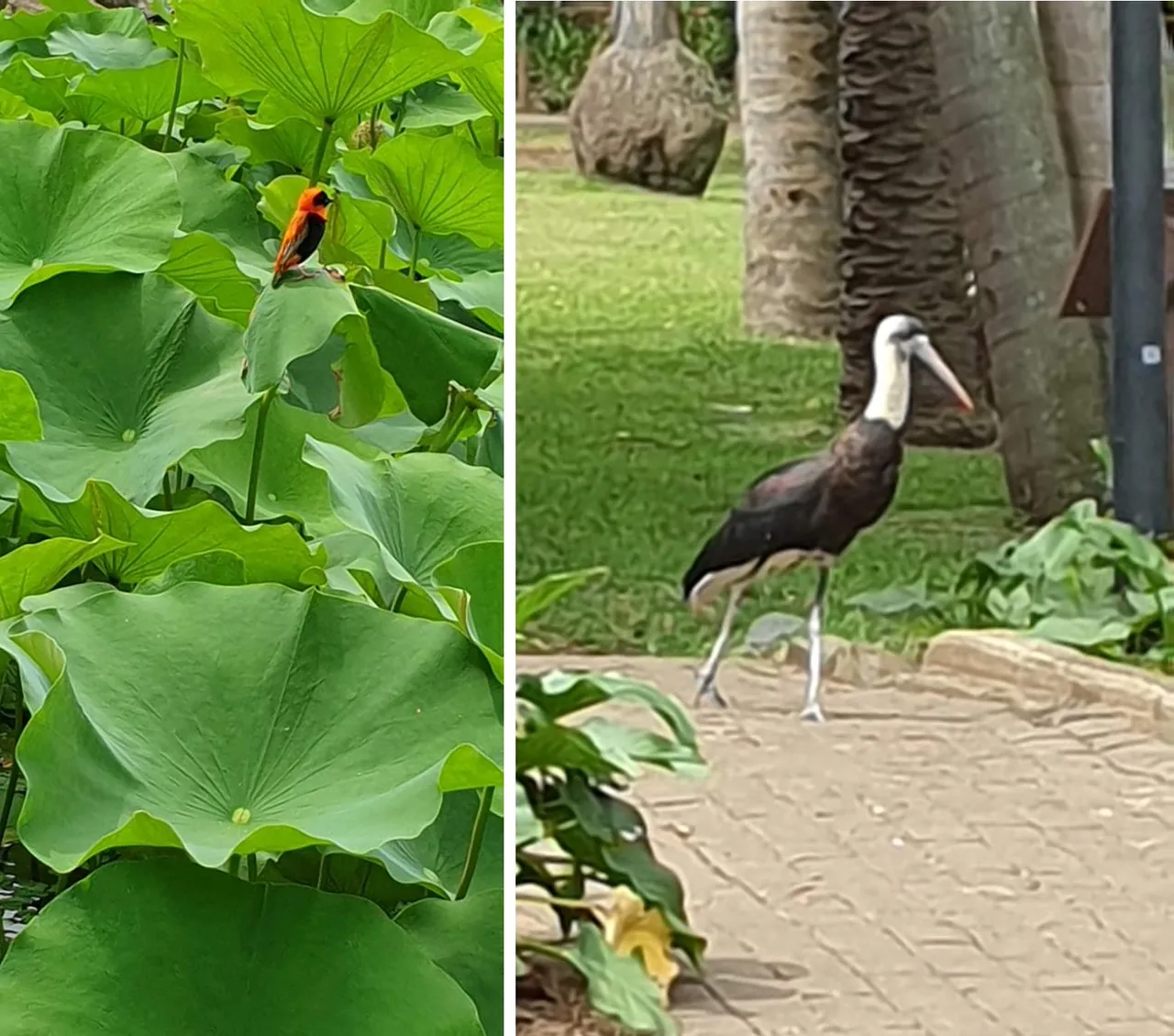
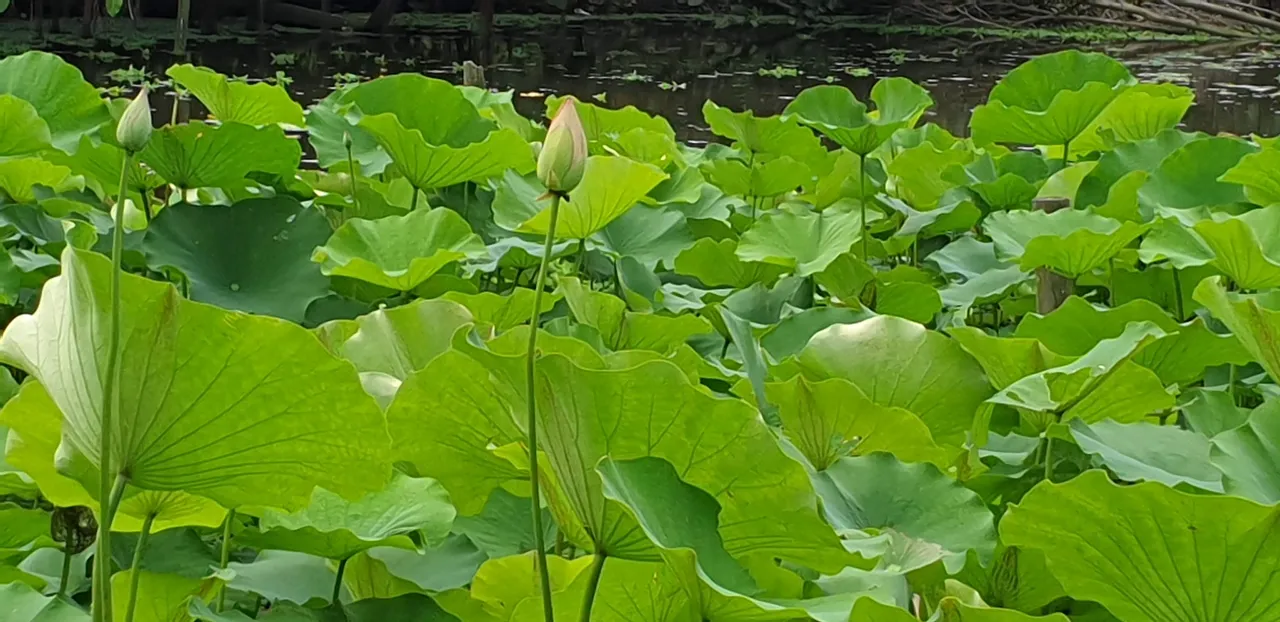
A lone Woolly-necked Stork and Red Bishops darting in between the Lotus leaves - they should be flowering in about a month's time.
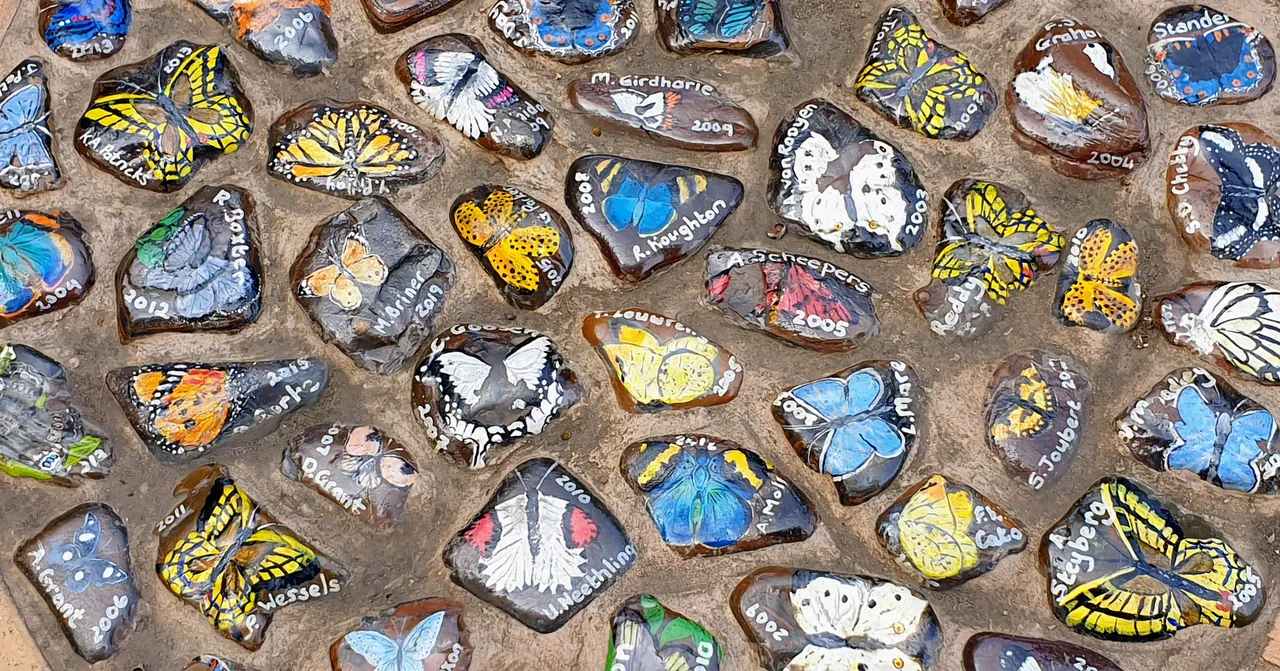
Organ Donor Garden
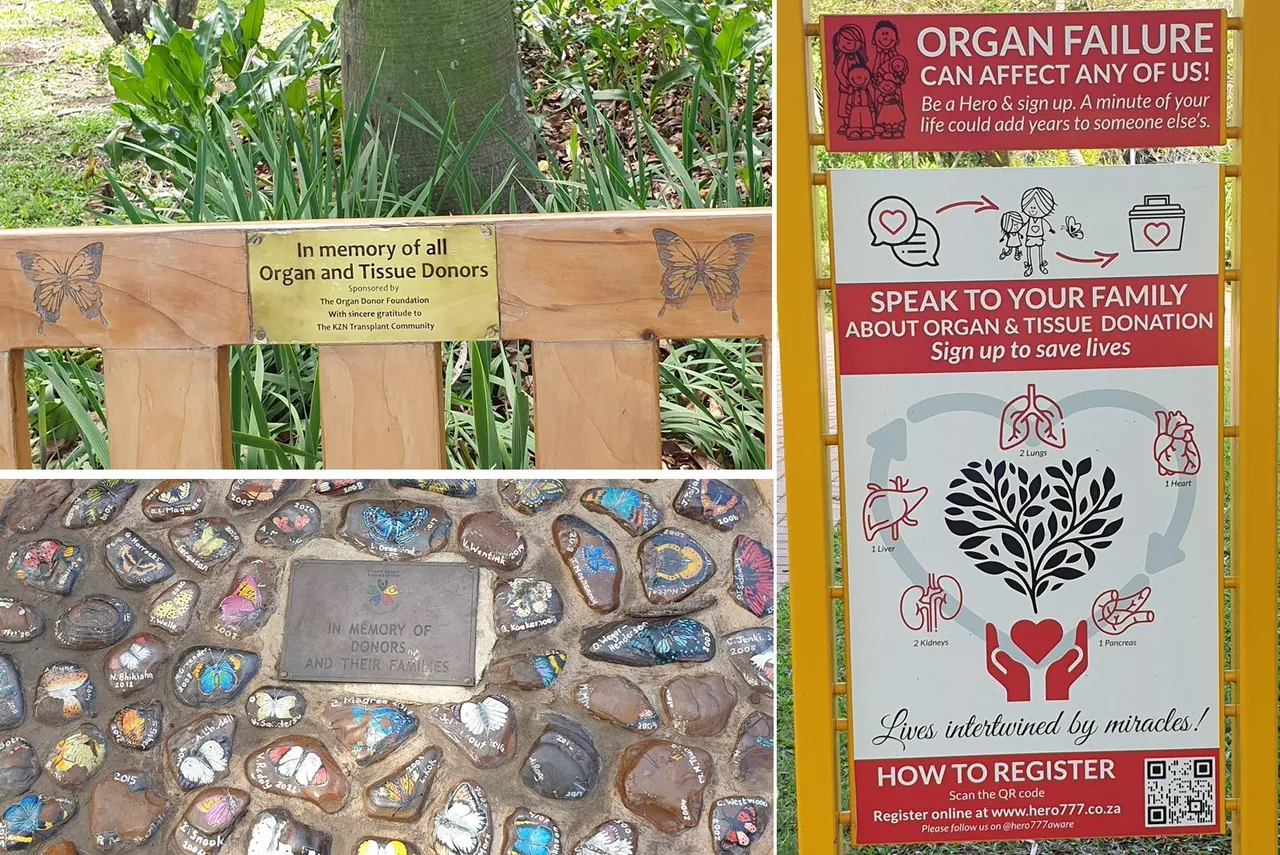
This is a section that is very close to my heart, as a friend's son who had been waiting for five years for a heart, eventually received a new heart about two months ago, all thanks to the Organ Donor Foundation. It only takes a couple of minutes to register and save a life when you leave this earth one day.
The stones are hand-painted by families of donors, with the names of their loved ones written on it.
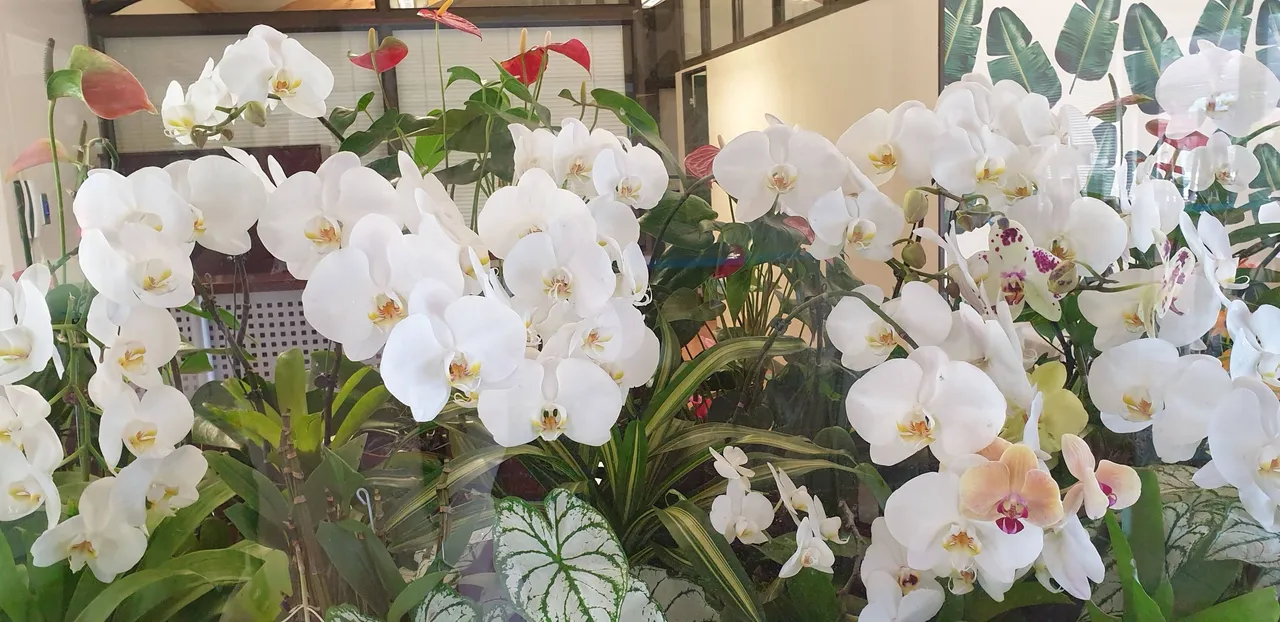
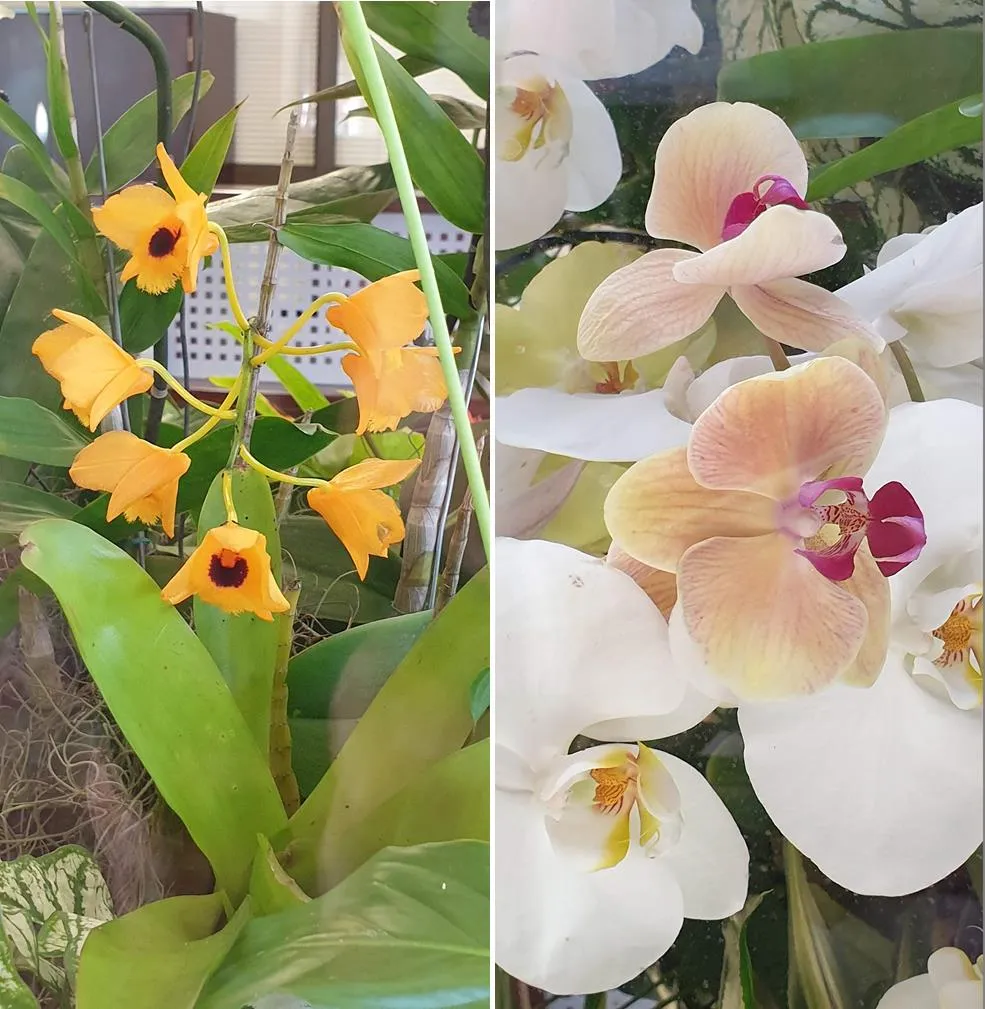
I'll end off with some stunning orchids found at the entrance/exit, where there is a super little gift shop with all kinds of handmade goods.
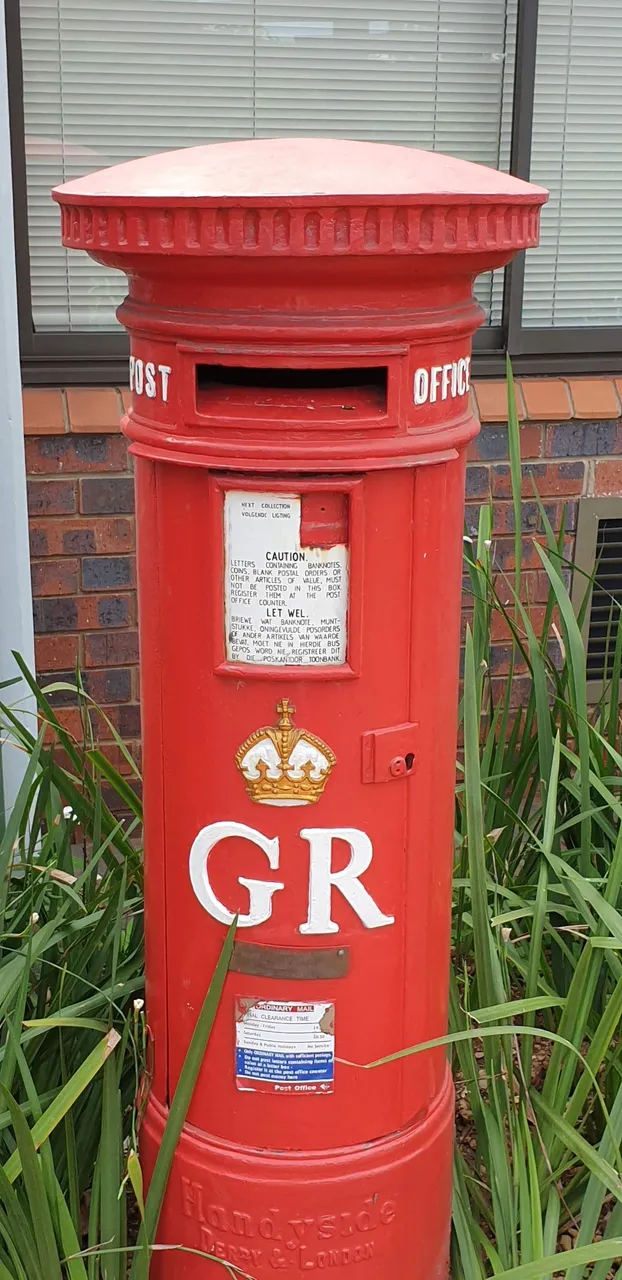
I could sit and write here all day, and still not cover all that I saw on this visit to the Botanic Gardens, so will say goodbye and publish my blog, unfortunately, if I popped it into this red post box outside the entrance/exit, it would never reach you. Unlike back in the day when this was the only means of communicating the written word across the seas.
I would say if you're a visitor to Durban, and you're a nature-lover, the Botanic gardens should be on your wish list!
...and look out for Vishnu at the entrance if you'd like to learn more. You can still explore even further on foot, which is what we did, but we ran out of time, so did not get to visit the Orchid House, and hope that the Butterfly Garden they're giving a facelift to, will be thriving next time we go.
Sharing a short video on our visit HERE

Banner by @mondoshawan
Original Content by @lizelle
Thank you for stopping by
Copyright @lizelle – All Rights Reserved
JOIN Hive using my referral LINK
Come and join our Silver Bloggers community 
Artwork by @artywink