
Hello Steemers!
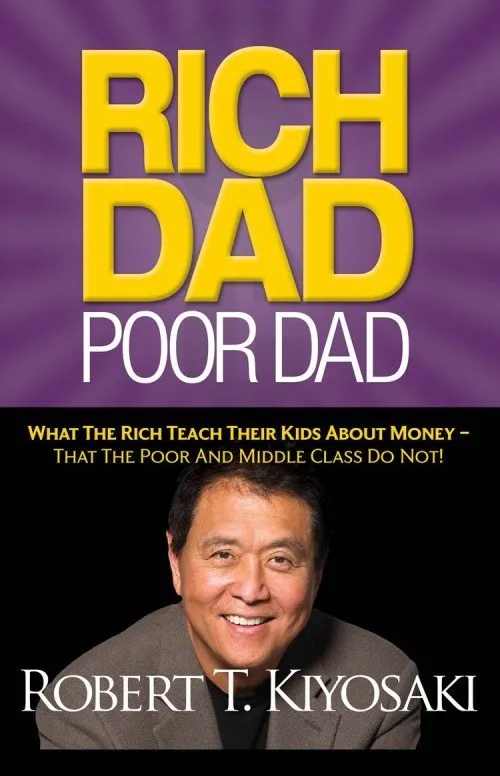
Robert Kiyosaki, the author of the historical book “Rich Dad, Poor Dad” and many others on financial education, shook the world when he claimed “Your house is not an asset!”
If you have no idea of what I’m talking about, I strongly suggest you read the book.
You can get it here: http://adf.ly/1cmT3j
Thank me later for this supreme piece of advice!
For the most of us, our house looks like an asset, right? It’s mine. I bought it!
Well… according to Robert, the lack of financial education comes in many forms and one of them is the misunderstanding and thus misuse of concepts.
Merriam-Webster presents the definitions of “asset” and “liability” in the easiest way possible, and very much like the regular person understands it:
Asset: “something that is owned by a person, company, etc.”
Liability: “something (such as the payment of money) for which a person or business is legally responsible”
However, Robert’s definitions are waaaaay more functional:
“An asset puts money in your pocket, whether you work or not.”
“A liability takes money out of your pocket, whether you work or not”
Imagine you become unemployed. Is your house putting money in your pocket every month? If the answer is “yes” it is an asset. Otherwise it is not. And if there is a mortgage, you still have to pay the bank every month even if you don’t have a job. So it’s clearly a liability.
In sum, it depends on how the cash is flowing. A house can be an asset if there is a tenant that every month pays you a rent that covers all the expenses (insurance, etc.). That same house can be a liability if you’re just living there and paying every month to the bank (it’s the bank’s asset).
Now just apply this model to everything you want… your car, your boat, your vacation house and find out what is behaving like an asset or a liability.
Still not getting it? Robert has one more way to put it: